


Why Are Cleaning Results Inconsistent Across Teams?
If a floor looks great on first shift and mediocre on second shift, most managers blame training, effort, or supervision. Sometimes that is true. The more expensive problem, though, usually starts earlier. It starts before the mop touches the floor. It starts before the spray bottle is filled. It starts at the chemistry stage.
That is the operational problem Fas-Tabs are built to address. According to Fas-Trak’s brochure, FAS-TAB XL and FAS-TAB XH use sodium chlorite and other ingredients to generate chlorine dioxide when mixed with water, and the resulting solutions are presented for defined surface-cleaning workflows rather than as a vague all-purpose concentrate. The same brochure shows application-specific preparation for trigger spray bottles, mopping systems, and larger bucket-based use.
That matters because inconsistency in commercial cleaning usually comes from variation. One employee pours a little extra chemical “just to be safe.” Another tries to stretch product. Another mixes a bottle quickly between tasks and hopes it is close enough. Multiply that across multiple shifts, buildings, carts, and supervisors, and you do not have a cleaning system. You have a guessing contest with invoices attached to it.
The Real Reason Cleaning Results Are Inconsistent
If your cleaning results vary by shift, location, or employee, the issue isn’t effort—it’s control.
Most facilities rely on manual chemical mixing. That introduces variability at the very first step of the process.
When dilution isn’t controlled:
- Performance fluctuates
- Surfaces are inconsistently treated
- Odors return quickly
- Rework increases
👉 The system breaks down before cleaning even begins.
Why This Problem Matters Now
Service contractors and in-house facility teams are being asked to do more with tighter labor, tighter schedules, and less tolerance for visible inconsistency. In modern facilities, the standard is not just “clean enough.” It is repeatable, trainable, and defendable. When a process depends too heavily on personal judgment during the mixing stage, repeatability disappears.
Fas-Tabs fit directly into that conversation because the brochure frames them as a pre-measured chemistry source for specific use cases. Fas-Trak lists a 100 ppm hand-surface cleaning solution for a trigger spray bottle with one FAS-TAB XL tablet in 1 quart or 1 liter of water, a 170 ppm mopping solution using one FAS-TAB XL tablet in a 20 oz cartridge, and a 150 ppm solution for the ULTRA-TRAK PLUS bucket with one FAS-TAB XH tablet in 4 gallons or 15 liters of water. Those examples matter because they show a controlled preparation model instead of open-ended manual dilution.
Facilities today face:
- Labor shortages
- Increased cleanliness expectations
- Rising operational costs
In this environment, inconsistency isn’t just inconvenient—it’s expensive.
The Main Problem Most Teams Misdiagnose
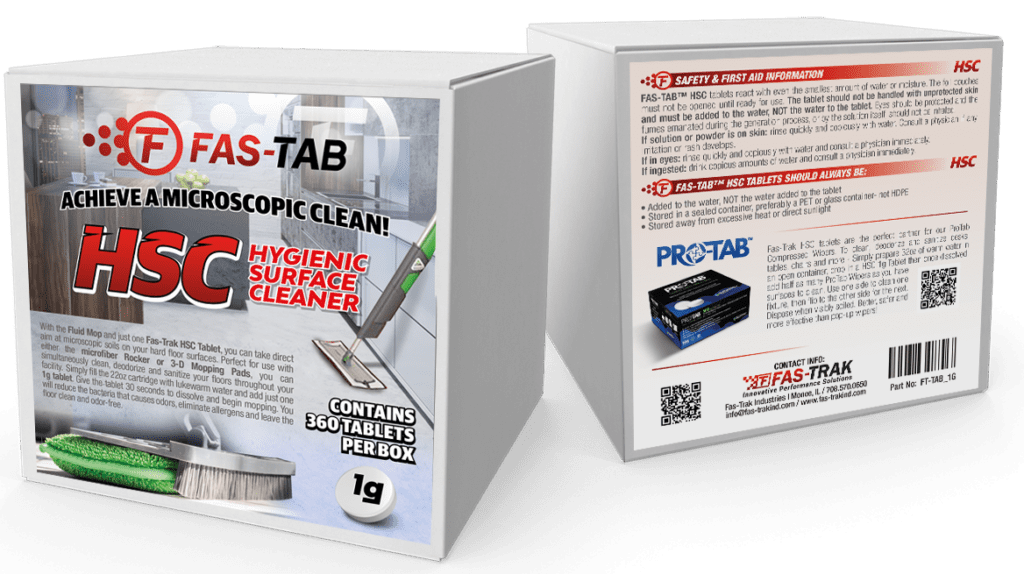
A lot of managers assume inconsistent results mean inconsistent people.
That is the lazy conclusion, and in many operations it is the wrong one.
When staff are handed bulk liquid chemistry and told to “mix it right,” management is outsourcing precision to memory, habit, speed, and opinion. Even good workers produce uneven results when the system itself allows variation. One person may make a stronger mix. Another may make a weaker one. Another may skip exact measuring because the site is busy and the cart is waiting.
The real issue is not attitude. It is system design.
When the setup step is variable, the final result is variable. That is not motivational psychology. That is process math. If you want consistent outcomes, the inputs have to be more controlled than the personalities using them.
The Hidden Risk: Chemistry Guesswork
Manual dilution creates:
- Overuse → wasted chemical cost
- Underuse → ineffective cleaning
- Inconsistent ppm levels → unpredictable results
👉 Two employees using the same product can produce completely different outcomes.
What Fas-Tabs Really Are
Fas-Tabs should not be marketed as “just tablets.” That undersells the whole system.
A stronger positioning statement is this: Fas-Tabs are a controlled chemistry delivery format designed to create use-specific chlorine dioxide solutions at the point of preparation. Fas-Trak’s brochure says the dissolved tablets create solutions that are highly effective in breaking down proteins and polysaccharides, greatly enhance the performance of microfiber and other Fas-Trak products, and aid in mold and mildew removal. The brochure also states that chlorine dioxide solutions, while containing no detergency ingredients, are still effective at penetrating and breaking down scum that can build up on contaminated surfaces.
That combination is strategically important because it moves the conversation away from “stronger chemical” language and toward “more controlled system” language. Facilities do not just need chemistry. They need chemistry that shows up the same way, in the same workflow, at the same concentration target, across multiple users and multiple tasks.
The Solution: Controlled Chemistry with Fas-Tabs
Fas-Tabs eliminate variability at the source.
Each tablet:
- Delivers precise dilution every time
- Produces consistent ppm levels
- Creates solution on demand
👉 No measuring. No estimating. No inconsistency.
Service-Business Scenario
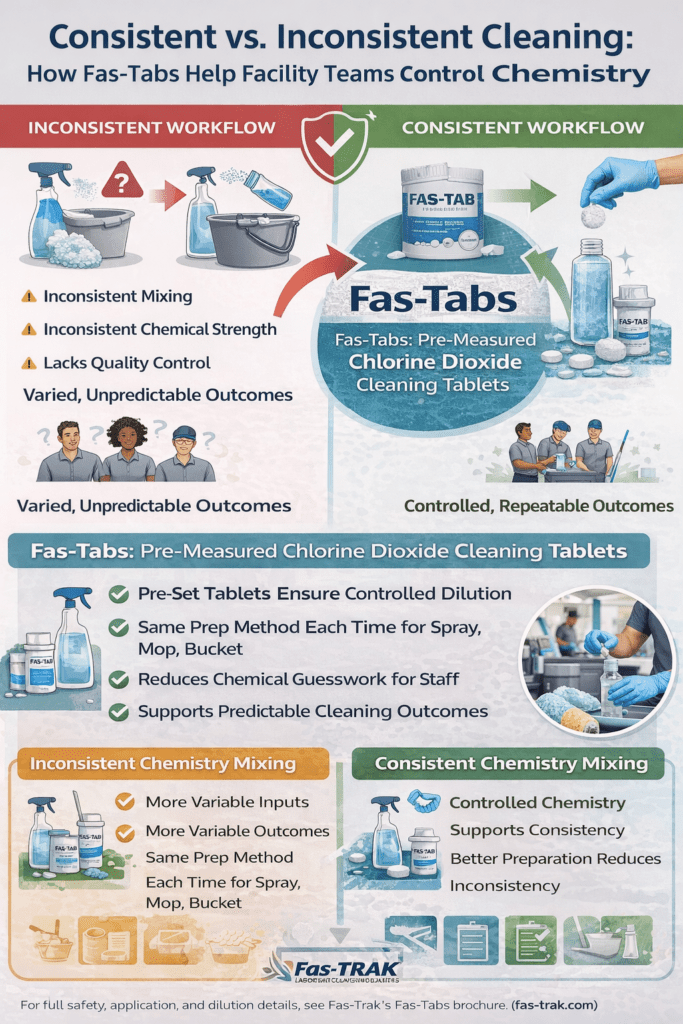
Picture a commercial cleaning contractor responsible for a school, a municipal office, and a fitness center. The company is not struggling because nobody cares. The struggle is that every site has slightly different habits. One lead tech mixes bottles one way. Another prefers a heavier mix. A third site uses more product because staff assume “more” means “better.” Complaints start sounding familiar: one building smells fresher than another, desks do not look equally clean, and floor outcomes vary from crew to crew.
Now change the workflow.
The supervisor implements Fas-Tabs as the chemistry-preparation standard. Trigger spray bottles are prepared to the same stated solution model. Mopping cartridges are prepared to the same stated solution model. Larger bucket-based workflows follow the same one-tablet-to-water-volume approach described by Fas-Trak. Staff training becomes less about remembering ounces and more about following the application-specific procedure.
Does that solve every cleaning problem overnight? No. Dirty pads still have to be changed. Surfaces still need proper dwell and wipe technique. Managers still need quality control. But it does remove one of the biggest silent causes of inconsistency: uncontrolled chemistry setup.
The Operational Impact
This is where the article needs to think like an operator instead of a brochure writer.
When preparation is standardized: training becomes easier because the instruction set is simpler,
supervision becomes easier because deviations are easier to spot,
supply planning becomes easier because usage is less random,
and results become easier to compare across crews and facilities.
The Fas-Trak brochure ties Fas-Tabs to multiple workflows, including trigger spray cleaning by hand with a microfiber wipe, the FLUID 3D mopping system, and the ULTRA-TRAK PLUS application. That matters because systems sell better than isolated products. A facility team does not want four disconnected solutions and a chemistry experiment on every cart. It wants a manageable process that can be repeated across hand cleaning, wiping, and mopping functions.
This is also where the labor-savings argument becomes more intelligent. The strongest case is not “one tablet magically saves the day.” The stronger case is that standardized prep reduces avoidable rework, lowers confusion during onboarding, and supports more consistent execution. That is the kind of operational claim decision-makers trust because it sounds like real life instead of sales glitter.
Misconceptions to Address
Misconception 1: More chemical always means better results
It usually means more variability. Overpowered mixtures do not automatically create better workflows. They often create waste, inconsistency, and harder troubleshooting.
Misconception 2: Good staff can compensate for weak systems
Strong staff help, but even strong staff cannot produce reliably standardized results when the process invites improvisation at the preparation stage.
Misconception 3: Fas-Tabs are just a convenience item
That is too small a frame. Their real business value is controlled chemistry preparation tied to repeatable application methods.
Why Professional Framing Matters
A strong article also has to stay honest. Fas-Trak’s brochure includes substantial precaution and handling language. It says the product should be stored in a cool, dry place away from direct sunlight, kept in an airtight container, and kept away from heat, sparks, open flames, water and water vapor before use, metals, metal salts, alkaline materials, reducing agents, and combustible materials. The brochure also instructs users not to handle the tablet with unprotected skin and warns against inhaling gas or vapors or ingesting the tablets or solution.
That matters for content quality because it keeps the article credible. Fas-Tabs are not a consumer gimmick or a casual “drop it in and forget it” item. They are part of a controlled professional cleaning process and should be presented that way. Strong commercial content does not oversimplify chemistry. It explains value while respecting handling requirements.
How Fas-Tabs Support the Broader Fas-Trak Story
Within the April article sequence, Fas-Tabs belong in week one because they are the chemistry foundation underneath the rest of the story.
Reva makes more sense when the chemistry behind the wipe system is controlled. Broader restroom and surface workflows make more sense when teams are not free-pouring liquids from memory. Even when a facility is evaluating odor control, wipe consistency, or general surface performance, the first operational question is still the same: are we preparing the working solution the same way every time?
That is why Fas-Tabs are best positioned as a system starter. They establish the “controlled outcome” idea that the rest of the Fas-Trak ecosystem can build on.
Why Fas-Trak Systems Matter
Service contractors and in-house facility teams are being asked to do more with tighter labor, tighter schedules, and less tolerance for visible inconsistency. In modern facilities, the standard is not just “clean enough.” It is repeatable, trainable, and defendable. When a process depends too heavily on personal judgment during the mixing stage, repeatability disappears.
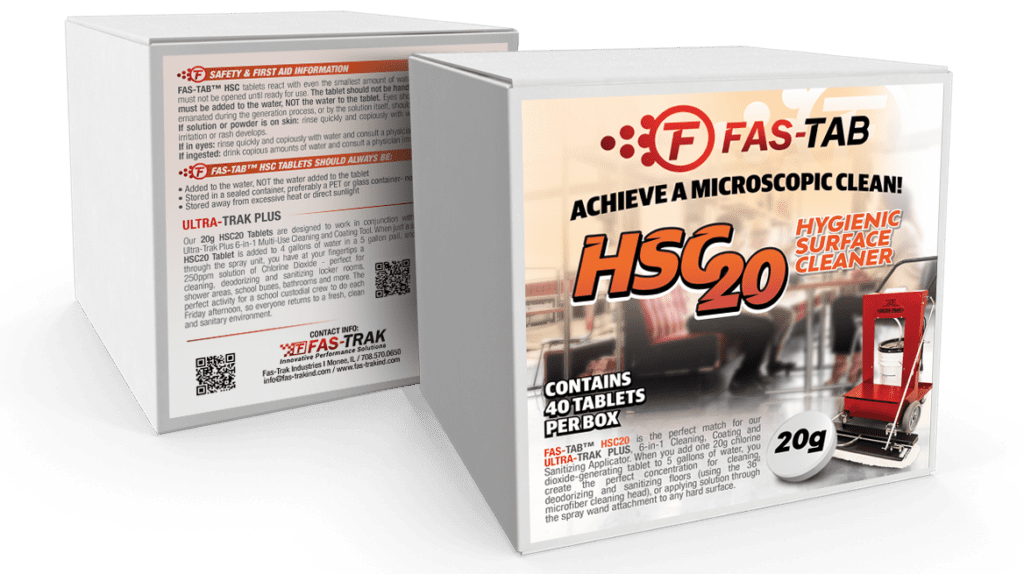
Fas-Tabs fit directly into that conversation because the brochure frames them as a pre-measured chemistry source for specific use cases. Fas-Trak lists a 100 ppm hand-surface cleaning solution for a trigger spray bottle with one FAS-TAB XL tablet in 1 quart or 1 liter of water, a 170 ppm mopping solution using one FAS-TAB XL tablet in a 20 oz cartridge, and a 150 ppm solution for the ULTRA-TRAK PLUS bucket with one FAS-TAB XH tablet in 4 gallons or 15 liters of water. Those examples matter because they show a controlled preparation model instead of open-ended manual dilution.
Fas-Tabs aren’t just a product—they’re a system foundation.
They enable:
- Reva controlled wipe delivery
- Consistent surface cleaning
- Reliable odor control
👉 Everything else depends on this step being right.
Future-Proofing Insight
The cleaning industry is slowly moving away from loose, personality-driven execution and toward standardized systems. That shift is being driven by labor volatility, training gaps, quality expectations, and the need for better repeatability across accounts.
Fas-Tabs align with that direction because the product is inherently process-oriented. The brochure does not position them as a vague miracle cleaner. It presents them through application-specific preparation instructions, defined solution targets, microfiber compatibility, and system use. That gives Fas-Trak a smarter story to tell: not “buy this tablet because tablets are trendy,” but “adopt a more controlled chemistry workflow because predictable preparation supports predictable results.”
And that is the real opportunity here. A lot of competitors sell chemicals. Fewer sell operational clarity.
Facilities are moving toward:
- Standardized systems
- Predictable outcomes
- Reduced reliance on individual performance
Controlled chemistry is the first step in that evolution.
Conclusion + CTA
When cleaning results vary, managers often start by asking who made the mistake. A better question is whether the process invited inconsistency in the first place.
Fas-Tabs give Fas-Trak a strong answer to that question. They create a more controlled starting point for trigger spray cleaning, mopping workflows, and bucket-based preparation; they are documented with specific use instructions and concentration models; and they support the bigger Fas-Trak message that better outcomes come from better systems, not from hoping every employee mixes chemistry exactly the same way every time.
If you want a cleaning program that is easier to train, easier to repeat, and easier to manage at scale, start where inconsistency usually begins: the mix.
If your results depend on who’s working that day, your system isn’t controlled.
Fas-Tabs fix that.
👉 Talk to an expert to implement precision cleaning systems across your facility.
(FAQs)
- What are Fas-Tabs designed to do?
Fas-Tabs are designed to generate chlorine dioxide solutions when mixed with water for defined cleaning workflows such as trigger spray applications, mopping systems, and bucket-based preparation. - Why do cleaning results vary so much between teams?
One major reason is inconsistent chemical preparation. When teams mix products differently, the starting point changes and results become harder to standardize. - Are Fas-Tabs positioned as a detergent?
No. Fas-Trak’s brochure specifically notes that chlorine dioxide solutions contain no detergency ingredients, while still being effective at penetrating and breaking down build-up on contaminated surfaces. - What solution example does Fas-Trak provide for trigger spray cleaning?
The brochure lists a 100 ppm solution made by filling a trigger spray bottle with 1 quart or 1 liter of water and adding one FAS-TAB XL tablet. - What solution example does Fas-Trak provide for mopping?
The brochure lists a 170 ppm mopping solution made by filling a 20 oz cartridge with water and adding one FAS-TAB XL tablet. - What solution example does Fas-Trak provide for ULTRA-TRAK PLUS?
The brochure lists a 150 ppm solution made by filling the ULTRA-TRAK PLUS bucket with 4 gallons or 15 liters of water and adding one FAS-TAB XH tablet. - What types of soil or contamination does the brochure say these solutions help break down?
The brochure says the solutions are highly effective in breaking down proteins and polysaccharides and are effective at penetrating and breaking down scum on contaminated surfaces. - Does Fas-Trak connect Fas-Tabs to microfiber workflows?
Yes. The brochure says the solutions greatly enhance the performance of microfiber and other Fas-Trak products. - What handling point should staff remember during mixing?
Fas-Trak repeatedly instructs users to add the tablet to the water, never the water to the tablet. - Why is Fas-Tabs a strong week-one article topic?
Because it establishes the chemistry-control foundation for the rest of the Fas-Trak system story, especially where repeatable preparation matters across multiple workflows.
