

The Problem Every Facility Deals With—but Few Understand
If a restroom smells bad, the immediate assumption is simple:
👉 “It needs to be cleaned more.”
So teams:
- increase cleaning frequency
- use stronger chemicals
- add fragrance-based solutions
And yet… the smell comes back.
Not hours later.
Sometimes minutes later.
Why This Problem Matters Now
Restrooms are one of the most judged areas in any facility.
They directly impact:
- customer perception
- employee satisfaction
- brand credibility
- inspection outcomes
And expectations are rising.
A restroom that “looks clean” but smells bad is no longer acceptable.
The Real Cause of Urinal Odor (It’s Not What You Think)

Odor in restrooms doesn’t start in the air.
It starts on surfaces.
More specifically:
- on floors
- on the front edge of urinals
- on surrounding splash zones
👉 And most of that contamination never makes it into the drain.
The Hidden Problem: Splash and Missed Capture Zones
Urinals create two types of contamination:
High-Force Splash
- Direct impact causes liquid to rebound
- Micro-droplets spread beyond the bowl
- Surrounding surfaces become contaminated
Low-Force Drips and Misses
- Lower trajectory streams miss the bowl edge
- Liquid runs down the front of the urinal
- Pools form on floors and base areas
👉 This second issue is the bigger problem—and the most ignored.
Why Traditional Solutions Fail
Most facilities rely on:
- standard urinal screens
- deodorizing blocks
- frequent cleaning
But these solutions:
- sit inside the bowl
- focus on fragrance, not control
- do not address front-edge contamination
👉 They treat symptoms, not the source.
The Core Issue: No Control at the Point of Impact
Urinals are not controlled systems.
They rely on:
- user behavior
- inconsistent angles
- unpredictable flow patterns
Without control:
- contamination spreads
- odor develops
- cleaning becomes reactive
What a Source-Control System Looks Like
The Your-In Urinal System introduces:
👉 Physical splash and drip control at the point of impact
Instead of reacting after contamination occurs, it prevents it from happening.
How the Your-In System Works
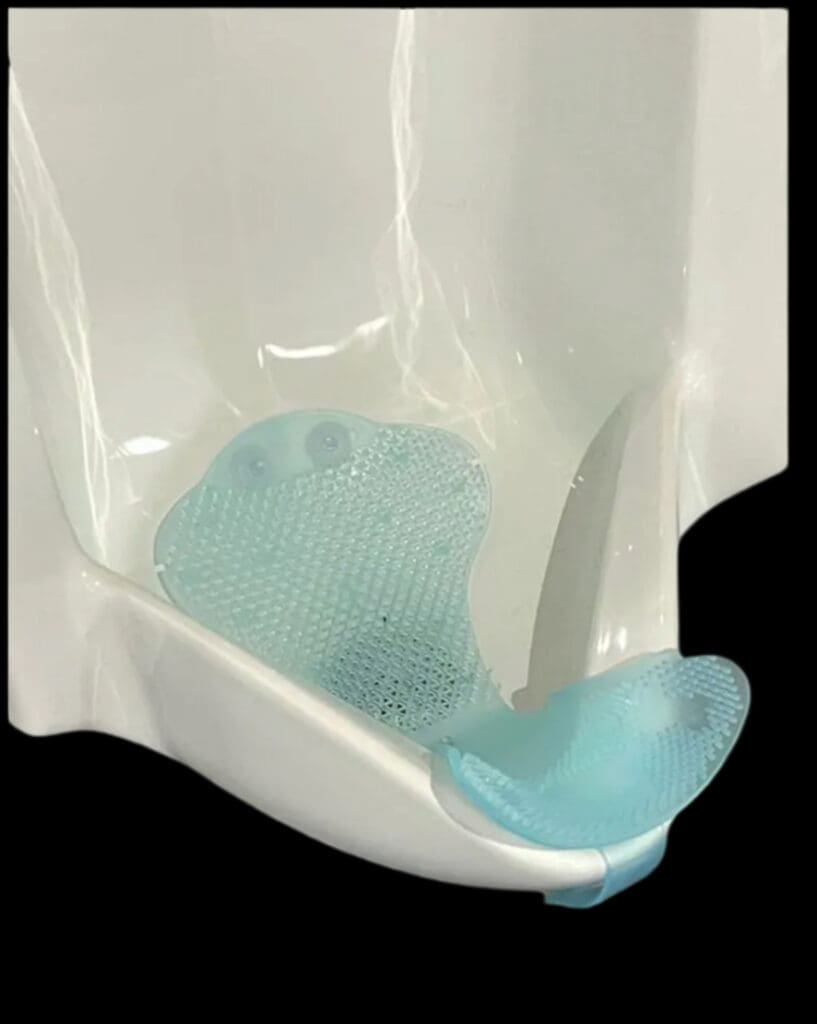
Front-Edge Capture Design
- Clips to the front of the urinal
- Intercepts drips before they hit the floor
- Controls runoff direction
Splash Reduction Engineering
- Reduces rebound from high-impact streams
- Limits spread beyond the bowl
- Keeps contamination contained
Stable Positioning
- Does not float or shift
- Maintains consistent placement
- Ensures continuous performance
Drain Protection (Secondary Benefit)
- Captures debris
- Helps prevent clogs
Service-Business Scenario
A high-traffic facility (stadium, school, or manufacturing site) experiences:
- constant odor complaints
- wet floors around urinals
- high labor spent on restroom cleaning
Cleaning frequency increases—but results don’t improve.
After implementing Your-In:
- splash is controlled at the source
- floors stay drier longer
- odor complaints drop
👉 Cleaning becomes maintenance—not damage control.

Misconceptions That Keep Facilities Stuck
“Odor is a cleaning problem”
Odor is a contamination problem.
Cleaning only addresses it after the fact.
“More chemicals will fix it”
More chemicals often:
- mask odor temporarily
- increase cost
- fail to stop the source
“Urinal screens solve splash”
Traditional screens only address:
- in-bowl splash
They do not address:
- front-edge runoff
- floor contamination
Why This Matters for System Design
High-performing facilities don’t rely on reaction.
They rely on:
- prevention
- control
- system design
Your-In shifts restroom maintenance from:
👉 reactive cleaning
to
👉 controlled contamination prevention
Future-Proofing Insight
Facility expectations are evolving toward:
- higher cleanliness standards
- reduced labor dependency
- better odor control
- more efficient systems
Restroom performance is becoming a measurable operational metric.
Systems that prevent problems—not just clean them—will lead.
Conclusion
If your restroom still smells after cleaning, the problem isn’t effort.
It’s control.
The Your-In Urinal System eliminates odor at the source by controlling splash and contamination before it spreads.
👉 Stop chasing odor.
👉 Start controlling where it begins.
FAQs
1. Why do urinals smell even after cleaning?
Odor is caused by contamination outside the bowl, including splash and drips that accumulate on floors and surfaces.
2. What causes most urinal odor problems?
The primary cause is splash and missed capture zones that allow liquid to spread beyond the urinal.
3. Do traditional urinal screens prevent odor?
They help with debris and limited splash but do not control front-edge runoff or floor contamination.
4. How does the Your-In system reduce odor?
It controls splash and captures drips at the source, preventing contamination before it spreads.
5. Does this reduce cleaning frequency?
Yes, because less contamination reaches surrounding surfaces.
6. Can this lower labor costs?
Yes, by reducing time spent on repeated cleaning and maintenance.
7. Is it easy to install?
Yes, it clips directly onto the urinal without complex setup.
8. Does it move or shift during use?
No, it is designed to stay securely in place for consistent performance.
9. Does it help with drain protection?
Yes, it also captures debris and helps prevent clogs.
10. Who benefits most from this system?
High-traffic facilities such as schools, stadiums, industrial sites, and commercial buildings.
