

The Overlooked Cost Hiding in Plain Sight
Vacuuming is one of the most repeated tasks in commercial cleaning. It happens daily. Sometimes multiple times per day. Yet most facilities never analyze its true labor cost.
They budget chemicals. They track consumables. They monitor disinfectant usage.
But vacuum productivity? Rarely measured correctly.
In large commercial environments—schools, healthcare facilities, hospitality properties, airports, distribution centers—vacuuming often represents 30–50% of total routine labor time. When performed with traditional 14"–20" corded uprights, productivity bottlenecks compound quietly:
- Time lost plugging and unplugging cords
- Reduced cleaning width requiring additional passes
- Trip hazard mitigation and safety management
- Operator fatigue over long routes
- Rework caused by missed debris or edge gaps
Individually, these inefficiencies seem minor. Over 60,000–200,000 square feet, they become expensive.
The shift to a cordless wide area vacuum is not about convenience. It is about correcting structural inefficiency in commercial cleaning workflows.
The Mathematics of Cleaning Width
A 28 inch commercial vacuum covers double the path of a traditional 14 inch upright. That alone alters productivity calculations.
If a standard upright averages 4,000–7,000 square feet per hour under real-world conditions, a properly deployed 28 inch commercial battery vacuum can dramatically increase coverage rates. The math is straightforward:
Fewer passes
Wider cleaning path
Reduced overlap
No cord repositioning
Multiply that by five nights per week across a 100,000 square foot facility, and the labor differential becomes substantial over a fiscal year.
Labor is the largest cost in commercial cleaning. Equipment that reduces labor hours without sacrificing performance is not an expense. It is a cost-control strategy.
Also read 👉🏼What Is The Fas-Vac Cordless Vacuum Cleaner?
The Cord Problem No One Talks About
Cords are operational friction.
They create:
- Trip hazards for operators and occupants
- Liability exposure
- Slower workflow due to outlet hunting
- Damage risk to walls and furnishings
- Compliance concerns in healthcare and education
OSHA injury reports consistently cite slips, trips, and falls as leading workplace incidents. Removing cords from high-traffic vacuuming operations reduces risk exposure in a measurable way.
A cordless wide area vacuum removes that friction entirely. Operators move continuously without interruption. Routes become fluid. Cleaning becomes linear instead of segmented by outlet availability.
Cordless design is not a luxury feature. It is a workflow redesign.
Lithium-Ion Technology Changed the Equation
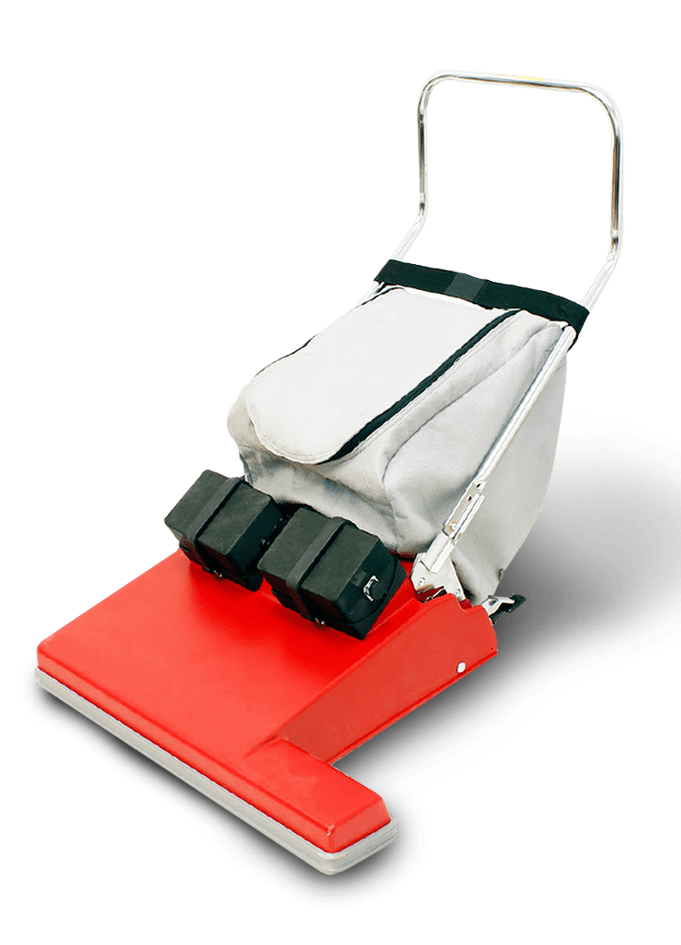
Earlier battery vacuums struggled with runtime, power consistency, and weight.
Modern 36V lithium-ion platforms changed that dynamic.
Lithium-ion technology offers:
- Stable suction throughout discharge cycles
- Faster recharge times
- Reduced overall machine weight
- Longer battery lifespan compared to legacy battery chemistries
- Lower maintenance requirements
In commercial environments, runtime reliability is essential. A commercial battery vacuum must perform for full shifts without power degradation that affects pickup performance.
When engineered correctly, cordless no longer means compromise. It means continuous productivity.
Safety, Efficiency, and Labor Retention
Cleaning is physically demanding work. Turnover in custodial and janitorial roles remains high across sectors.
Equipment design directly impacts:
- Operator fatigue
- Shoulder and back strain
- Push resistance
- Route efficiency
- Morale
Wide-area vacuums with balanced weight distribution and maneuverability reduce strain over large coverage zones. Removing cord drag further decreases resistance.
In an era of persistent labor shortages, facilities must evaluate equipment through a retention lens. Ergonomic improvements are not soft benefits. They contribute to workforce stability.
2026 and Beyond: The Electrification of Cleaning Fleets
Commercial facilities are steadily transitioning toward electrified, battery-powered equipment portfolios.
Drivers include:
- Sustainability initiatives
- Reduced noise levels
- Indoor air quality goals
- Safety compliance
- Labor optimization
A cordless wide area vacuum aligns with this broader electrification strategy. It integrates seamlessly into modern cleaning fleets that prioritize efficiency and environmental responsibility.
The move toward commercial battery vacuum systems is not a trend. It is a structural evolution in facility operations.
Total Cost of Ownership: Beyond Purchase Price

Procurement teams increasingly evaluate equipment using total cost of ownership (TCO) models.
Key considerations include:
- Labor hours saved annually
- Injury risk reduction
- Maintenance intervals
- Battery lifespan
- Parts availability
- Operational uptime
When labor savings are factored into a three-year projection, wide-area cordless systems frequently demonstrate favorable ROI compared to multiple smaller corded units requiring longer cleaning cycles.
The purchase price is one line item. Labor impact is continuous.
Also Read 👉🏼How to Maximize This Summer’s School Cleaning & Floor Refinishing
Reframing the Question
The real question is not whether a cordless wide area vacuum is more advanced.
The real question is whether facilities can afford to ignore measurable labor inefficiencies embedded in traditional vacuum workflows.
A 28 inch commercial vacuum powered by modern lithium-ion technology addresses productivity, safety, and operational resilience simultaneously.
Facilities that quantify their square-foot coverage and labor allocation often discover that the shift to a commercial battery vacuum is not optional—it is strategic.
(FAQs)
1. How does a cordless wide area vacuum reduce labor costs?
By increasing cleaning width and eliminating cord repositioning, it reduces total cleaning time per shift, lowering labor hours required for large facilities.
2. Is a commercial battery vacuum powerful enough for heavy debris?
Modern lithium-ion systems provide consistent suction and brush performance comparable to corded commercial units.
3. What size facility benefits most from a 28 inch commercial vacuum?
Facilities over 20,000 square feet with large open carpeted or mixed-surface areas see the greatest productivity gains.
4. How long do lithium-ion batteries last in commercial vacuums?
Battery lifespan varies by usage, but high-quality lithium-ion packs typically support hundreds to thousands of charge cycles under proper maintenance.
5. Are cordless wide area vacuums safe for healthcare environments?
Yes. Removing cords reduces trip hazards and improves infection control by minimizing contact with floor obstacles.
6. Do battery vacuums require more maintenance?
No. Lithium-ion systems generally require less maintenance than older battery chemistries and eliminate cord wear issues.
7. How do wide area vacuums compare to traditional uprights?
Wide area vacuums cover more square footage per pass, reducing cleaning time in large open spaces.
8. Is a 28 inch commercial vacuum difficult to maneuver?
Modern designs prioritize balance and ergonomic handling, allowing efficient operation even in large facilities.
9. What industries benefit most from cordless wide area vacuums?
Education, healthcare, hospitality, retail, airports, and large commercial properties benefit significantly.
10. Is switching to battery-powered equipment part of sustainability goals?
Yes. Many facilities incorporate battery-powered equipment to reduce energy usage, noise, and operational inefficiencies.
