




How Much Labor Could You Actually Save? A Global Cost-Analysis of Fas-Trak vs. Conventional Cleaning & Coating Methods
Facility managers, commercial cleaning companies, and industrial maintenance teams worldwide continue to face the same stubborn cost obstacle: labor represents 80–90% of the total cost of cleaning and coating operations. This isn’t a marginal factor—it’s the entire financial battlefield. The industry has tried to optimize around chemicals, equipment, and scheduling, but the real breakthrough emerges when you reduce the labor burden itself.
Fas-Trak, a U.S.-based manufacturer known for next-generation cleaning and coating systems, has built its business around solving that exact problem. Their applicators, mopping systems, and waste-handling technologies are designed to dramatically reduce human labor while simultaneously improving precision and surface quality. For global teams navigating tightening budgets, inconsistent labor pools, and increasing facility demands, the labor-savings advantage isn’t just convenient—it’s transformative.
This article breaks down how Fas-Trak equipment compares to traditional manual methods, explores real-world time savings, and visualizes the long-term ROI for organizations of every size.
Understanding the Labor Problem in Cleaning & Coating Operations
Traditional mop-and-bucket methods, manual coating applicators, and outdated maintenance tools create inefficiencies that compound over time. Every extra minute of labor increases cost—and every mistake increases rework, which adds more cost.
Across environments like hospitals, schools, airports, industrial plants, and commercial buildings, labor drains budgets because:
- Techniques require repetitive, time-intensive motion
- Surfaces must often be coated or cleaned twice
- Drying delays increase facility downtime
- Inconsistent manual application leads to rework
- Staffing shortages require higher pay or overtime
These challenges exist globally, from North American hospitals to European manufacturing plants to Asia-Pacific logistics centers.
Fas-Trak eliminates many of these inefficiencies by simply enabling teams to do the same work in a fraction of the time.
How Fas-Trak Reduces Labor Hours Through Smarter Design
For example, the Ultra-Trak and Micro-Trak applicators—available at
https://fas-trak.com/coating-applicators/ —are engineered to deliver uniform, controlled applications of coatings, sealers, and finishes.
Their benefits directly attack labor waste:
1. Precision Application Reduces Rework
When coatings are applied inconsistently using traditional methods, streaks, overlaps, or thin patches often require re-application. Fas-Trak’s even distribution reduces these failures.
2. Faster Surface Coverage
Applicators cover dramatically more square footage per hour than mop or roller methods—often 3× to 6× faster, depending on the surface type.
3. Reduced Physical Fatigue
Innovative designs like the Fluid 3D Mopping System allow workers to move ergonomically, reducing strain and extending productivity.
4. Faster Turnover for High-Traffic Environments
Hospitals, airports, and schools benefit from shortened cleaning windows, reducing operational disruption.
Hypothetical Time Savings — A Realistic Scenario
Let’s model a conservative comparison:
50,000 sq. ft. commercial facility floor coating project
Traditional methods:
- Avg. coverage: 1,500 sq. ft. per hour
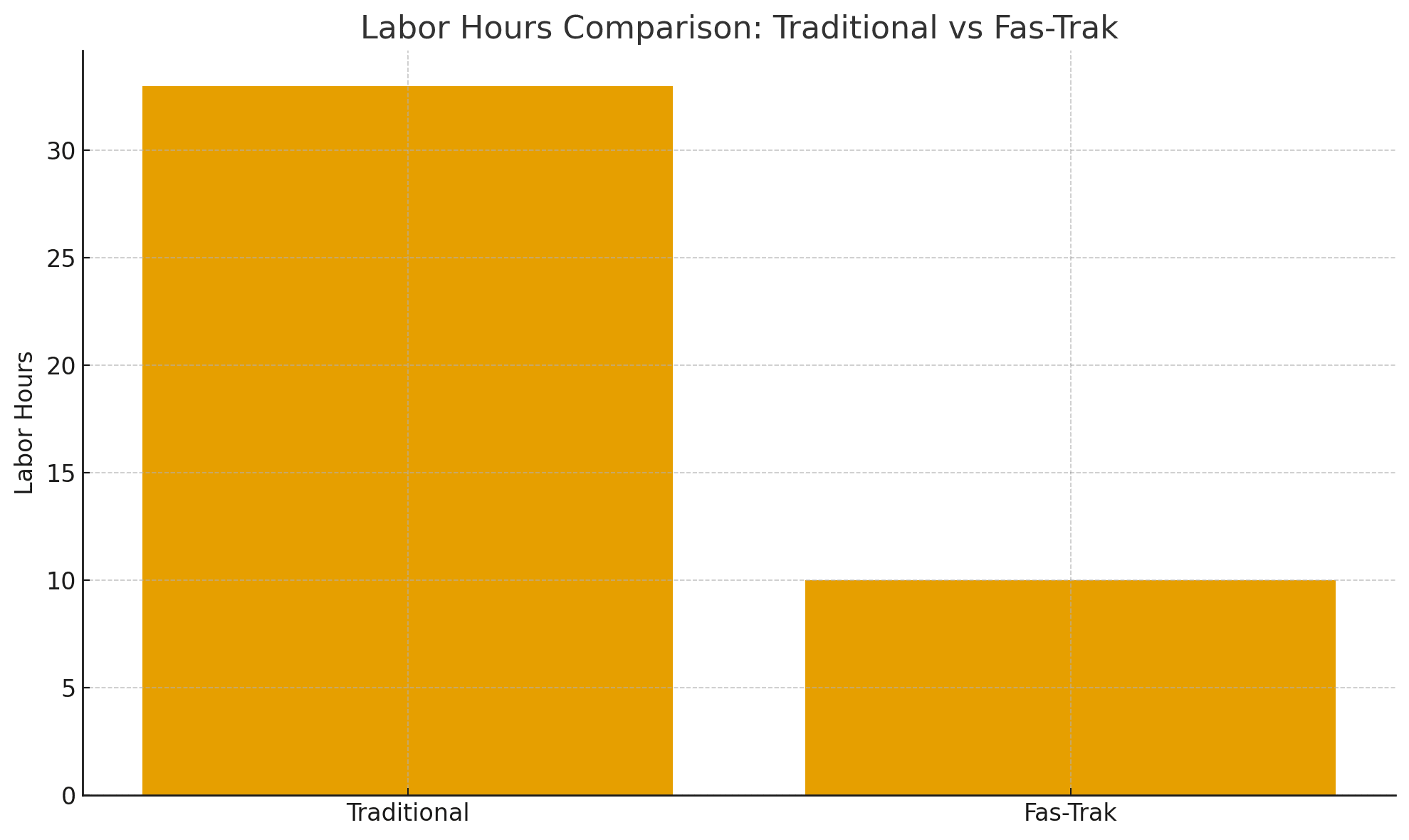
- Total time: 33 hours
- Labor rate: $25/hr
- Labor cost: $825
Fas-Trak method:
- Avg. coverage: 5,000 sq. ft. per hour
- Total time: 10 hours
- Labor rate: $25/hr
- Labor cost: $250
Labor Savings: 70% reduction
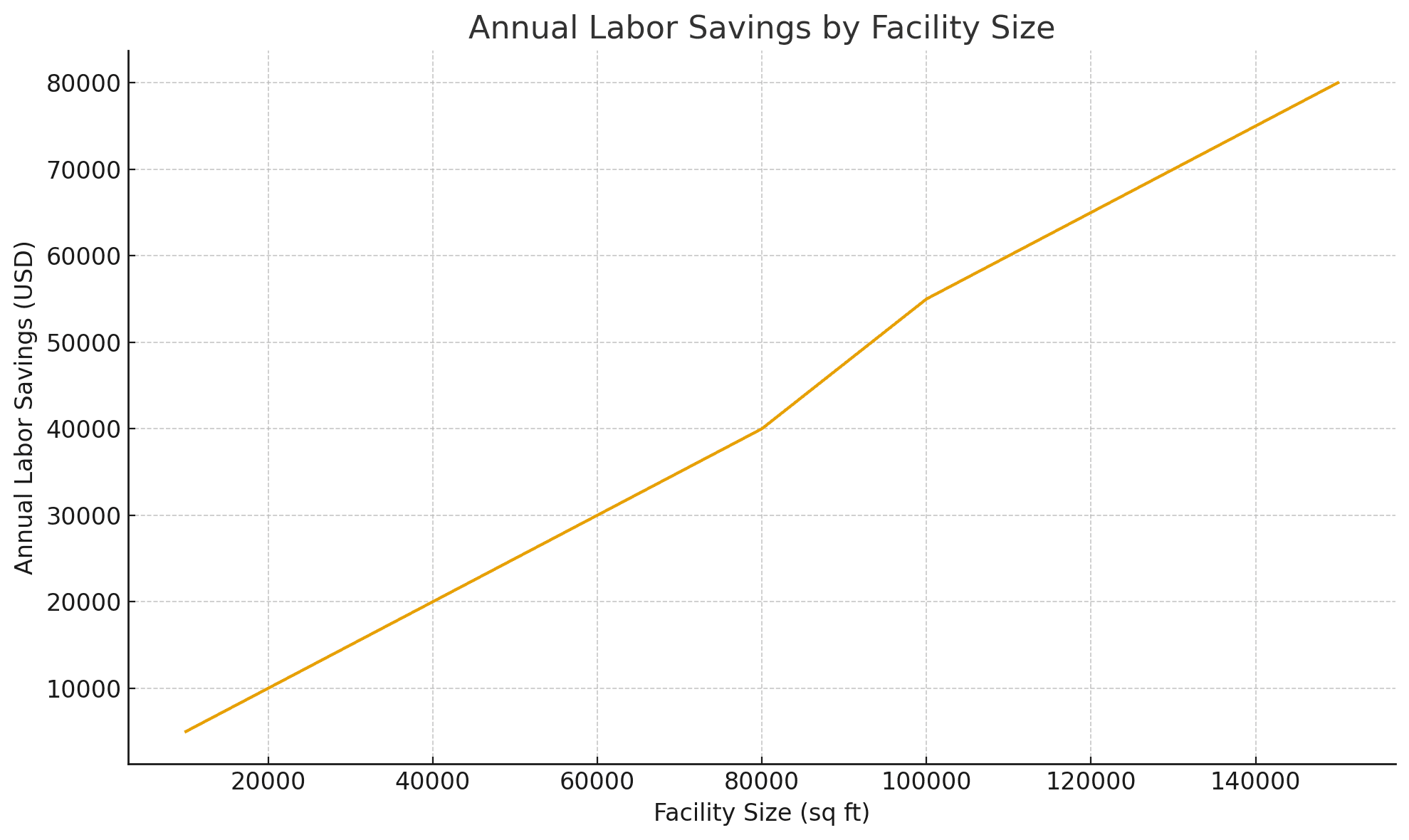
That’s a single project. Now extrapolate to weekly, monthly, or year-round maintenance, and it becomes a compelling financial breakthrough.
Graphs & Visualizations
Below are recommended chart placements for final publishing:
Long-Term Cost Reduction: The Hidden Power of Labor Efficiency
Fas-Trak’s durability, U.S.-manufactured quality, and ergonomic design produce savings years beyond the initial purchase. The reduction in rework, fatigue, injuries, and downtime produces compounding ROI.
A global team with high turnover or inconsistent staffing sees an even stronger return—Fas-Trak makes it easier to onboard new workers with fewer mistakes and higher efficiency.
Why This Matters for Facility Managers and Decision-Makers
Facility operations leaders care about:
- Predictability
- Reduced downtime
- Cleaner and safer environments
- Lower recurring labor costs
- Multi-surface compatibility
- Faster staff training
Fas-Trak enables all of these simultaneously.
For example, a hospital operating under strict sanitation demands or a large school district with limited weekend maintenance windows both benefit from faster, more controlled surface cleaning.
Traditional methods simply cannot keep up with the required speed and precision.
Global Scalability: A Solution That Works Anywhere
Whether a facility is in the U.S., Europe, Asia, or the Middle East, the challenges are consistent:
- Rising labor costs
- Need for efficiency
- Facility downtime pressures
- Demand for predictable, repeatable results
Fas-Trak systems are engineered for global adaptability, making them a viable solution for multinational companies and international cleaning contractors.
Explore Fas-Trak’s full system lineup here:
https://fas-trak.com
Conclusion: When Labor Is 80–90% of Cost, Efficiency Becomes Strategy
As Fas-Trak states on its website, “labor represents 80–90% of the total cost” of cleaning and coating operations. That single statistic reframes how leaders should approach cleaning budgets: the smartest investment is the one that reduces labor hours—not chemical costs, not equipment wear, not scheduling tweaks.
Fas-Trak’s technology does exactly that, transforming traditional workflows and unlocking faster, safer, more consistent results. For global facility teams under pressure to do more with less, Fas-Trak offers one of the most realistic paths to long-term operational savings.
Learn more or explore their full equipment line:
https://fas-trak.com
FAQs
1. How does Fas-Trak reduce labor hours compared to traditional tools?
By increasing coverage speed, improving application precision, and minimizing rework.
2. Are Fas-Trak systems suitable for global commercial cleaning companies?
Yes, they’re engineered for worldwide scalability and multi-surface use.
3. What surfaces work best with Fas-Trak applicators?
Concrete, tile, sealed floors, gym floors, and large commercial spaces.
4. Do Fas-Trak tools require special training?
Training is simple, and Fas-Trak provides detailed videos and support.
5. How does the Ultra-Trak differ from the Micro-Trak?
Ultra-Trak is ideal for large coverage; Micro-Trak excels in maneuverability.
6. Does Fas-Trak help reduce facility downtime?
Yes—faster cleaning means less interruption to building operations.
7. What industries save the most labor using Fas-Trak?
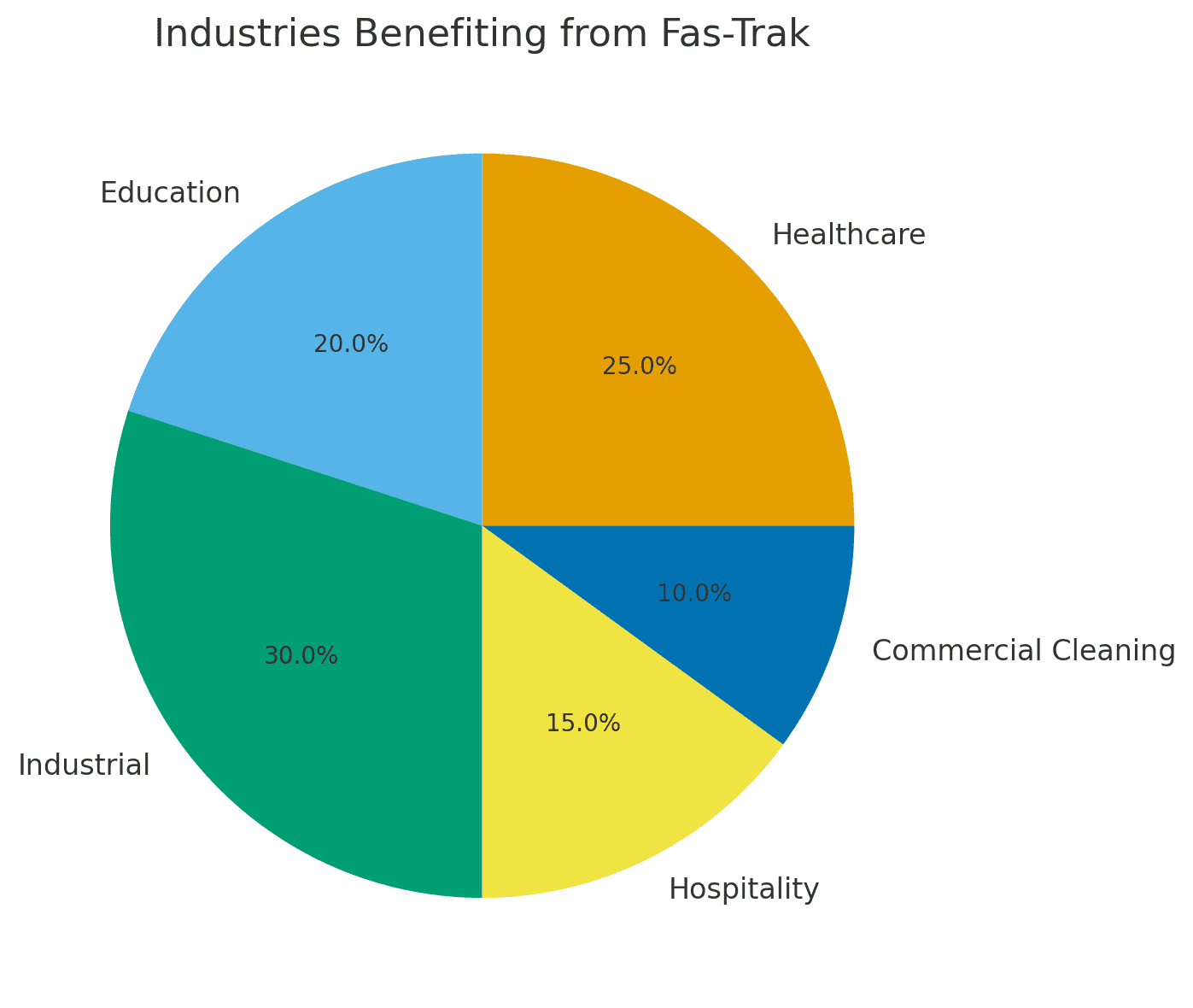
Healthcare, education, industrial, hospitality, and commercial cleaning.
8. Are Fas-Trak tools environmentally efficient?
Yes, their systems reduce chemical waste and improve application control.
9. Can Fas-Trak equipment lower long-term operational costs?
Absolutely—labor savings compound over months and years.
10. Where can I learn more about Fas-Trak products?
Visit: https://fas-trak.com</
