

Why Traditional Mop & Bucket Cleaning Is a Hidden Ergonomic Hazard
For more than a century, the mop and bucket have been treated as “good enough.” They’re familiar, inexpensive, and universally understood. What they are not is safe.
Traditional mopping forces workers into repeated cycles of bending, twisting, wringing, pushing saturated mop heads, and lifting buckets that can weigh more than 40 pounds when full. These movements load the spine, shoulders, wrists, and knees in ways that ergonomics research consistently flags as high risk for musculoskeletal disorders (MSDs).
In commercial and institutional facilities, where staff repeat these motions for hours per shift, the cumulative damage becomes unavoidable. Back injuries, tendonitis, carpal tunnel syndrome, and chronic shoulder pain aren’t rare incidents — they are predictable outcomes of outdated tools.
From a facility management perspective, this is not just a health issue. It’s a financial one. Workers’ compensation claims, absenteeism, turnover, retraining costs, and reduced morale quietly erode operational efficiency long before the injury shows up on a balance sheet.
The Science of Ergonomics: Why Tool Design Matters More Than Training
Training helps — but it cannot overcome bad physics.
Ergonomics focuses on designing tools and systems that fit the human body rather than forcing the body to adapt. When cleaning tools require excessive force, awkward postures, or repetitive stress, even well-trained workers eventually break down.
Modern ergonomic research shows that reducing load weight, minimizing repetition, and maintaining neutral body positions are the most effective ways to prevent injury. This is where next-generation systems like 3D-mopping fundamentally change the equation.
Rather than improving technique around flawed equipment, 3D-mopping redesigns the work itself.
What Is 3D-Mopping and How Is It Different?
3D-mopping is not a marketing buzzword — it’s a shift in how fluid delivery, agitation, and surface contact occur during floor cleaning.
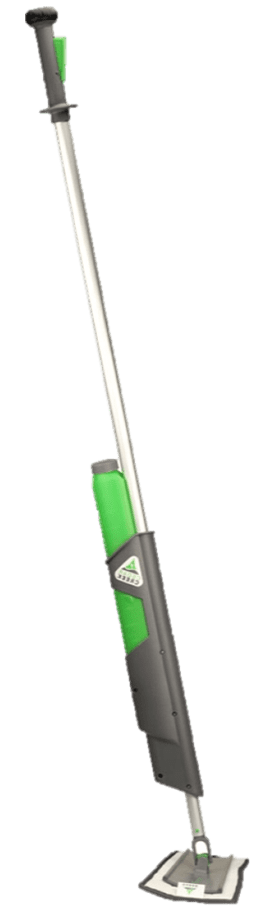
The Fluid 3D Mopping System, developed by Fas-Trak, replaces the traditional bucket-based workflow with an integrated tool that combines:
- On-demand fluid delivery
- Lightweight aluminum construction
- Ergonomic grip and trigger control
- Interchangeable cleaning heads designed for different floor profiles
Instead of soaking a mop, wringing it out, and pushing excess water across the floor, the operator applies controlled amounts of solution directly where needed. The cleaning motion becomes smoother, lighter, and more efficient — reducing both physical effort and unnecessary repetition.
How the Fluid 3D Mopping System Reduces Physical Strain
1. Eliminates Heavy Lifting and Wringing
One of the highest injury-risk actions in traditional mopping is wringing out a saturated mop head. This motion compresses the wrists, strains the shoulders, and places rotational stress on the spine.
The Fluid 3D system removes wringing entirely. Solution is dispensed through the tool itself, meaning no buckets to lift, no mop heads to twist, and no awkward torque applied to joints.
2. Reduces Repetitive Motion Injuries
Repetitive strain injuries occur when small stresses accumulate over thousands of motions. Traditional mopping requires constant back-and-forth passes to compensate for uneven moisture and inconsistent soil removal.
With 3D-mopping, fluid application and agitation are controlled and consistent. Fewer passes are needed, which directly reduces repetition in the shoulders, elbows, and wrists.
3. Supports Neutral Posture and Body Alignment
The ergonomic handle design and balanced weight distribution allow workers to maintain upright posture instead of hunching or twisting. Neutral alignment significantly lowers spinal compression and muscle fatigue, especially during long shifts.
This matters most in healthcare, education, hospitality, and industrial facilities where staff clean large square footage daily.
Worker Health Outcomes Facility Managers Actually Care About
From an operational standpoint, the benefits of ergonomic tools must translate into measurable outcomes. With 3D-mopping systems, they do.
Facilities that transition away from mop and bucket methods consistently report:
- Fewer reported back and shoulder complaints
- Reduced injury-related absenteeism
- Lower workers’ compensation exposure
- Improved staff retention and morale
- Faster onboarding for new employees
When cleaning is physically easier, workers last longer in their roles. That stability is increasingly critical as labor shortages continue across the facilities sector.
Safety Improvements Beyond Ergonomics
Health and safety extend beyond muscle strain.
Traditional mopping leaves behind excess water, increasing slip-and-fall risks for both staff and building occupants. Because 3D-mopping uses controlled fluid delivery, floors dry faster and more evenly.
This improves compliance with modern safety standards and reduces liability exposure — a growing concern as regulations evolve toward stricter workplace injury prevention requirements.
Also Read 💦How to Maximize This Summer’s School Cleaning & Floor Refinishing
The Financial Case: Ergonomics as a Cost-Control Strategy
The mistake many organizations make is viewing ergonomic tools as “premium upgrades.” In reality, they are cost-containment tools.
Injury claims cost far more than equipment. Lost productivity, overtime coverage, retraining, and administrative burden compound quickly. By reducing the root causes of injury, 3D-mopping systems often pay for themselves in months — not years.
For facility managers tasked with balancing safety, performance, and budgets, ergonomics is no longer optional. It is infrastructure.
Future-Proofing Facilities for 2026 and Beyond
Looking ahead, regulatory pressure around worker safety is only increasing. Organizations that proactively adopt ergonomic systems will be better positioned for:
- Stricter OSHA enforcement
- ESG and workforce-wellbeing reporting
- Labor retention challenges
- Rising insurance and compensation costs
3D-mopping represents not just a better way to clean, but a smarter way to manage human capital in facilities.
Conclusion: Clean Floors Shouldn’t Come at the Cost of Worker Health
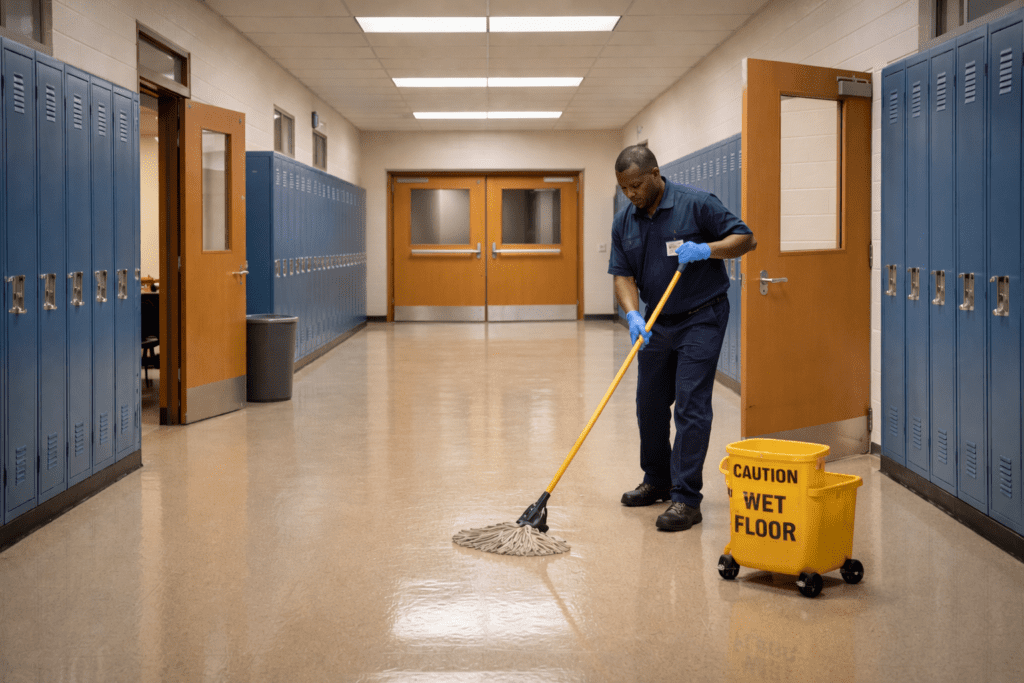
The mop and bucket had a good run. But in modern facilities, tradition is no excuse for preventable injury.
By transitioning to ergonomic systems like the Fluid 3D Mopping System, facility managers can protect their teams, reduce risk, and improve operational efficiency — all without sacrificing cleaning performance.
Healthy workers clean better. Safer systems last longer. And smarter tools shape the future of facility management.
Also Read 💦Enhancing Custodial Staff Skills for Better Service Quality
People Also Ask
-
Why is traditional mopping bad for worker health?
It requires heavy lifting, wringing, bending, and repetitive motions that increase the risk of musculoskeletal injuries. -
What is 3D-mopping?
A modern floor-cleaning method that integrates fluid delivery and agitation into an ergonomic, lightweight tool. -
How does 3D-mopping reduce back injuries?
By eliminating bucket lifting and wringing while supporting upright posture and smoother motion. -
Does ergonomic cleaning equipment really reduce injuries?
Yes. Ergonomic tools reduce strain, repetition, and awkward postures — the primary causes of cleaning-related injuries. -
Is 3D-mopping faster than mop and bucket cleaning?
Yes. Controlled fluid application reduces passes and increases productivity. -
Does 3D-mopping improve slip-and-fall safety?
Yes. Less excess water means faster drying and reduced slip hazards. -
Is training required for 3D-mopping systems?
Minimal training is needed due to intuitive design. -
Can 3D-mopping be used on different floor types?
Yes. Interchangeable attachments allow use on smooth and profiled surfaces. -
Is ergonomic equipment more expensive long-term?
No. Reduced injuries and absenteeism often deliver rapid ROI. -
Why should facility managers care about ergonomics now?
Because labor shortages, rising injury costs, and future regulations make proactive safety investments essential.
