

The Clock Is the Enemy in Educational Facilities with Financial Constraints
In K–12 schools and universities, cleaning is a race against time. Class changeovers are short. Budgets are tight. Staffing shortages are chronic. And expectations—from parents, administrators, and public health agencies—keep climbing.
Custodial teams are asked to do more, faster, with fewer people… and still deliver visibly clean, hygienically safe spaces.
This case study examines how educational facilities reduced cleaning time, labor strain, and chemical overuse by adopting Fas-Trak’s Ultra-Trak and Micro-Trak dispensing systems—without sacrificing cleanliness or compliance.
The Problem: Traditional Cleaning Systems Are Built for a World That No Longer Exists
Most schools still rely on legacy cleaning methods:
- Manual dilution at mop sinks
- Over-application of chemicals “just to be safe”
- Inconsistent ratios between shifts
- Time lost walking to refill stations
- Staff confusion across multi-product environments
The result is predictable:
- Wasted labor hours
- Chemical overuse and higher spend
- Surface residue that attracts dirt faster
- Inconsistent outcomes that trigger complaints
In large campuses, these inefficiencies compound daily.
The Turning Point: Rethinking the System, Not the Staff
Facility managers involved in this case study didn’t blame their custodial teams. Instead, they asked a smarter question:
“What if the system itself is the bottleneck?”
Enter Fas-Trak’s Ultra-Trak and Micro-Trak platforms—designed to standardize dilution, simplify workflows, and eliminate guesswork at scale.
Solution Overview: Ultra-Trak + Micro-Trak in Action
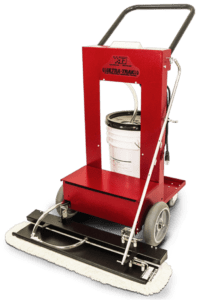
Ultra-Trak Plus: Centralized Precision for High-Volume Areas
Ultra-Trak systems were deployed in:
- Custodial closets
- Mechanical rooms
- High-traffic academic buildings
Key advantages:
- Fixed dilution ratios eliminate human error
- Fast-fill capability reduces refill time
- One-touch dispensing simplifies training
- Consistent chemical performance across shifts
Custodians no longer adjusted ratios manually—or questioned whether yesterday’s mix was “right.”
Ultra-Trak Plus Product sheet Here 👉🏼https://fas-trak.com/wp-content/uploads/2024/02/Ultra-Trak-Plus_hf_v7.pdf
Micro-Trak Plus: Portable Control Where It Matters Most
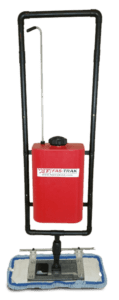
Micro-Trak units were assigned to:
- Classroom wings
- Restroom carts
- Athletic and dormitory cleaning teams
Why this mattered:
- On-the-spot dilution reduced walking time
- Smaller, lighter units improved ergonomics
- Uniform labeling eliminated product confusion
- Less chemical exposure improved staff safety
The system traveled with the worker, not the other way around.
Micro-Trak Plus Product sheet Here 👉🏼https://fas-trak.com/wp-content/uploads/2024/02/microtrak-plus_v8_hf.pdf
Measurable Results: What Changed After Implementation
1. Cleaning Time Was Cut—Significantly
Across participating facilities:
- Refill time dropped by 30–45%
- Room turnaround improved during short class windows
- Night crews completed routes faster with fewer overtime hours
Time saved wasn’t theoretical. It showed up on schedules and payroll.
2. Chemical Usage Became Predictable (and Lower)
With locked-in dilution ratios:
- Overuse was eliminated
- Chemical inventory stabilized
- Facilities reported 20–35% reduction in product consumption
Less waste. Less residue. More control.
3. Training Became Faster and More Reliable
New custodial staff were trained in hours—not days—because:
- Systems removed decision-making from the process
- Visual cues reduced language barriers
- Standardized workflows replaced tribal knowledge
Consistency replaced guesswork.
View Training Video Here 📽️Ultra-Trak Plus
View Training Video Here 📽️Micro-Trak Plus
4. Health & Safety Outcomes Improved
Facilities noted:
- Reduced slip-hazard complaints from over-wet floors
- Fewer chemical exposure incidents
- Improved compliance with internal safety protocols
This matters in environments responsible for children and young adults.
Why Educational Facilities Are a Perfect Fit for Fas-Trak Systems
Schools and universities have unique demands:
- Large square footage
- Multiple buildings
- High occupant turnover
- Tight custodial windows
The technology doesn’t replace workers—it removes friction from their work.
The Bigger Picture: Cleaning as Infrastructure, Not Chore
The most important insight from this case study isn’t about chemicals or equipment.
It’s about mindset.
Facilities that treated cleaning as operational infrastructure—rather than a background task—saw measurable gains in:
- Efficiency
- Staff morale
- Budget predictability
- Compliance confidence
Ultra-Trak and Micro-Trak didn’t just speed things up. They stabilized the entire system.
Final Takeaway: Faster Isn’t Rushed—It’s Designed
When cleaning systems are engineered correctly:
- Speed increases without cutting corners
- Safety improves without added steps
- Quality becomes consistent, not heroic
For schools and universities under constant pressure to do more with less, Fas-Trak’s Ultra-Trak and Micro-Trak systems offer a proven, scalable solution that respects both time and people.
FAQs
1. Are Ultra-Trak systems suitable for large campuses?
Yes. They are designed for centralized, high-volume environments.
2. Can Micro-Trak units be used on carts?
Absolutely. Portability is one of their primary strengths.
3. Do these systems require extensive staff training?
No. Most teams are trained in a single session.
4. How do they prevent over-dilution?
Dilution ratios are fixed and mechanically controlled.
5. Are they compatible with multiple cleaning chemistries?
Yes, depending on the configuration selected.
6. Do they reduce chemical exposure risks?
Yes. Closed systems limit handling and splashing.
7. Are these systems compliant with green cleaning programs?
They support compliance by preventing overuse and waste.
8. How quickly do facilities see ROI?
Many report noticeable savings within the first quarter.
9. Can they be standardized across multiple buildings?
That is one of their core advantages.
10. Are they suitable for both K–12 and higher education?
Yes. They scale effectively across both environments.
Ready to step up your game? Give us a call at Fas-Trak to talk to one of our specialist today!
