

Are Your Cleaning Wipes Causing Inconsistency and Waste?
The Convenience Trap in Commercial Cleaning
Pre-moistened wipes were designed for convenience.
And in small-scale environments, they work—temporarily.
But in commercial facilities, high-traffic environments, and multi-shift operations, that convenience turns into a liability.
What starts as a simple solution becomes:
- inconsistent
- wasteful
- difficult to control
👉 And most facilities don’t realize wipes are the problem—they just see the symptoms.
Why This Problem Matters Now
Modern facilities are under increasing pressure to:
- reduce labor dependency
- improve consistency across teams
- control chemical usage
- meet higher hygiene expectations
Cleaning is no longer judged by effort—it’s judged by repeatability.
And wipe systems sit right in the middle of that challenge.
Also Read 💦What Are Pro-Tabs & Why Are They Transforming Commercial Cleaning?
The Real Problem: Wipes Without Control
Pre-moistened wipe systems are inherently flawed because they lack control at the point of use.
They are:
- pre-saturated
- stored over time
- exposed to air and handling
👉 That means performance changes before the wipe is even used.
Where Traditional Wipes Break Down
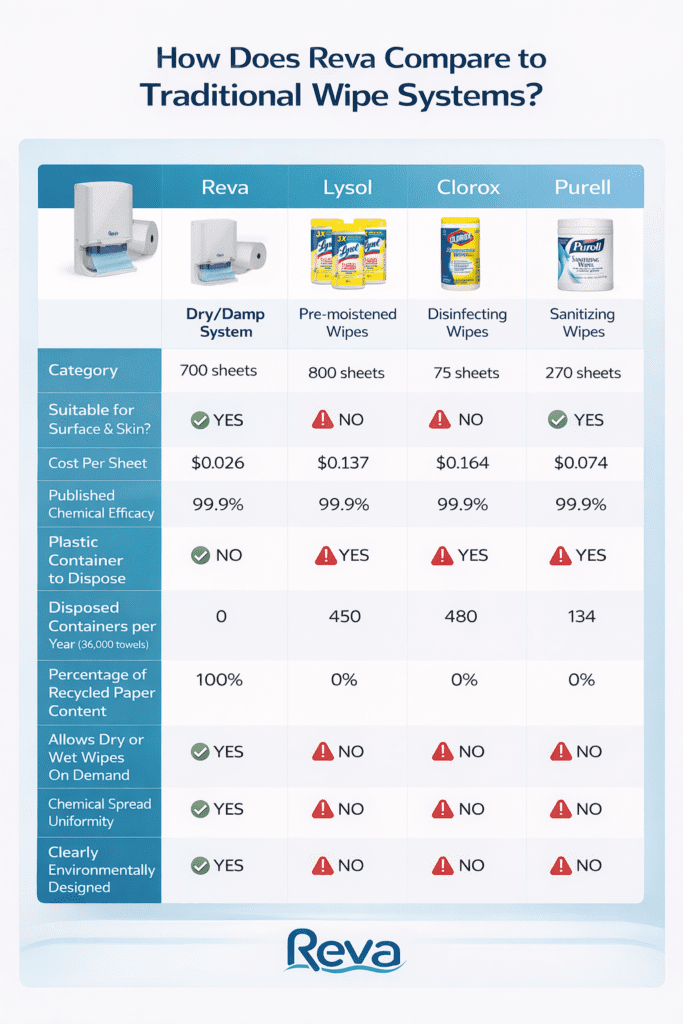
1. Inconsistent Moisture Levels
- First wipes are often over-saturated
- Later wipes begin to dry out
- Moisture distribution becomes uneven
👉 Result: Surfaces are not cleaned evenly
2. Chemical Degradation Over Time
- Pre-mixed solutions lose effectiveness
- Exposure to air reduces consistency
- Storage conditions vary across locations
👉 Result: Reduced cleaning performance
3. Lack of Dilution Control
- No way to adjust concentration
- No standardization across teams
- Overuse or underuse becomes common
👉 Result: Guesswork replaces process
4. Cross-Contamination Risk
- Shared containers increase contact points
- Staff may reuse wipes to conserve supply
- Open systems expose materials to contaminants
👉 Result: Cleaning introduces risk instead of reducing it
5. Operational Waste and Cost
- Dried-out wipes are discarded
- Plastic containers accumulate
- Inventory becomes unpredictable
👉 Result: Higher costs with less efficiency
The Core Issue: Static Systems in Dynamic Environments
Commercial cleaning environments are dynamic.
Wipe systems are static.
That mismatch creates:
- variability
- inefficiency
- inconsistent results
👉 A system that cannot adapt at the point of use cannot produce consistent outcomes.
Also Read 💦Fas-Trak Cleaning Systems for Hospitals & Airports | High-Risk Facilities
What a Controlled System Looks Like Instead
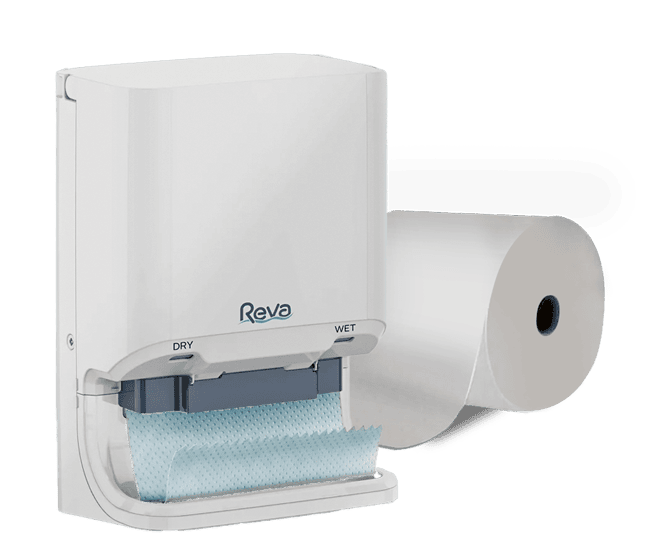
Reva, paired with Fas-Tabs, introduces a different model:
👉 Controlled wipe delivery at the moment of use
Instead of relying on pre-moistened materials, the system creates consistency through process control.
How Reva + Fas-Tabs Change the Workflow
On-Demand Solution Creation
- Fas-Tabs generate fresh cleaning solution
- No degradation from storage
- Consistent chemistry every time
Controlled Moisture Application
- Wipes are dampened consistently
- No over-saturation or dryness
- Uniform performance across every use
Touchless Dispensing System
- Reduces user contact
- Limits contamination points
- Improves hygiene control
Standardized Cleaning Process
- Same steps every time
- Same output every time
- Reduced variation between employees
Service-Business Scenario
A medical facility experiences:
- inconsistent wipe performance
- supply waste from dried materials
- variability between cleaning staff
After implementing Reva + Fas-Tabs:
- wipes are consistently prepared
- staff follow a standardized process
- cleaning outcomes become predictable
👉 The improvement isn’t effort—it’s system control.
Also Read 💦Fas-Trak 2026 Innovations: Reva Dry-Damp Wipers & UV-Air Hand Dryer
Operational Impact Section
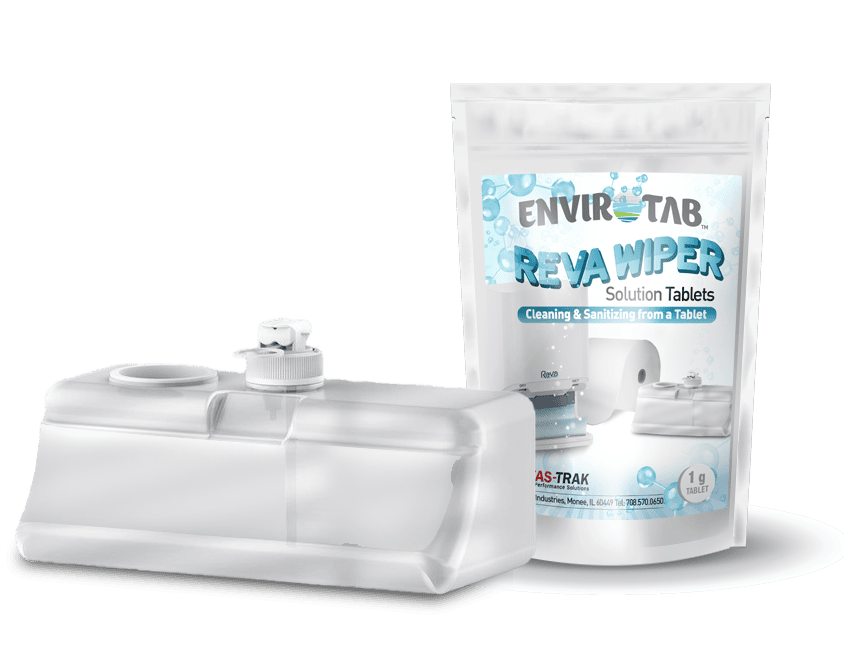
When wipe delivery becomes controlled, measurable improvements follow:
Labor Efficiency
- Less time managing supplies
- Reduced rework from inconsistent cleaning
- Faster, more predictable workflows
Chemical Control
- Accurate solution usage
- Reduced overuse and waste
- Consistent application strength
Training Simplification
- Fewer variables to teach
- Clear, repeatable workflow
- Faster onboarding
Cost Stabilization
- Lower material waste
- Predictable inventory usage
- Reduced emergency reordering
Misconceptions That Hold Facilities Back
“Wipes are the easiest solution”
They are easy—but not controlled.
“More moisture means better cleaning”
Over-saturation often reduces efficiency and increases waste.
“All wipe systems perform the same”
Performance depends on:
- moisture consistency
- chemical control
- delivery method
Why This Matters for Facility Performance
High-performing cleaning teams don’t rely on products alone.
They rely on systems that:
- reduce variability
- standardize outcomes
- support consistent execution
Reva + Fas-Tabs shift cleaning from:
👉 reactive effort
to
👉 controlled process
Also Read 💦Optimal Cleaning Supplies For Daily Business Needs
Future-Proofing Insight
The industry is moving toward:
- touchless systems
- sustainability-driven decisions
- standardized workflows
- reduced chemical variability
Pre-moistened wipes do not align with that direction.
Controlled systems do.
Conclusion + CTA
If your wipe system creates variability, your cleaning results will reflect it.
Reva, paired with Fas-Tabs, replaces inconsistency with control.
👉 Build a cleaning system that delivers the same result—every time.
FAQs
1. Why do pre-moistened wipes fail in commercial cleaning?
Pre-moistened wipes become inconsistent due to drying over time, uneven saturation, and chemical degradation, which leads to unpredictable cleaning results across different users and shifts.
2. What is the main advantage of the Reva system?
The Reva system provides controlled wipe delivery by dispensing consistent, properly dampened wipes at the point of use, improving cleaning reliability and reducing variability.
3. How do Fas-Tabs work with Reva?
Fas-Tabs create fresh cleaning solution on demand, which is used to dampen wipes consistently, ensuring uniform chemical application and eliminating guesswork.
4. Does this system reduce chemical waste?
Yes, it reduces waste by preventing over-saturation, eliminating dried-out wipes, and ensuring only the necessary amount of solution is used each time.
5. Is the Reva system touchless?
Yes, Reva uses a touchless dispensing method, which helps reduce cross-contamination and improves hygiene in high-traffic environments.
6. Does this system improve cleaning consistency?
Yes, by controlling both moisture and chemical delivery, the system ensures every wipe performs the same, leading to repeatable and predictable results.
7. Is training easier with this system?
Yes, the standardized process removes variability, making it easier for staff to learn and follow consistent cleaning procedures.
8. Can this system reduce labor time?
Yes, it reduces time spent dealing with inconsistent supplies, rework, and inefficient cleaning practices, allowing staff to work more efficiently.
9. Is it more sustainable than traditional wipes?
Yes, it reduces plastic waste, minimizes chemical overuse, and eliminates partially used or dried-out wipe disposal.
10. Who benefits most from this system?
Healthcare facilities, schools, commercial buildings, and industrial environments benefit the most due to their need for consistent, scalable, and efficient cleaning systems.
