

How to Reduce Repetitive Motion in Commercial Cleaning Tasks
Estimated Reading Time: 11 minutes
Reducing repetitive motion in commercial cleaning requires more than teaching employees to lift correctly or take breaks. Effective cleaning ergonomics begins with identifying tasks that involve repeated bending, reaching, gripping, pushing, pulling, and twisting—then improving the equipment and workflows that create those demands.
For facility managers, EVS leaders, safety directors, and custodial supervisors, the goal is straightforward: reduce unnecessary physical strain while maintaining cleaning quality and operational productivity.
The question is not simply whether employees can work faster. It is whether the cleaning process can be redesigned so they perform fewer physically demanding movements to achieve the same result.
Operational Intelligence™ Executive Brief
Commercial cleaning exposes employees to repetitive movements and awkward working positions that may contribute to work-related musculoskeletal disorders (MSDs). OSHA identifies poorly designed tools, forceful exertion, and prolonged awkward postures as important housekeeping-related ergonomic concerns.
Facility leaders can address these risks through better task organization, appropriately designed equipment, employee involvement, and measurable workflow improvements.
Fas-Trak's Operational Intelligence™ approach connects these principles to practical equipment evaluations, helping facilities examine how cleaning work is performed—not simply which machines are being used.
Key Takeaways
- Repetition becomes more concerning when combined with force, awkward posture, prolonged exposure, or inadequate recovery.
- Ergonomic improvements should prioritize reducing unnecessary physical demands rather than asking employees to tolerate them.
- Equipment such as Fas-Trak's FLUID-3D, FAS-EDGE, Clean Spin, and FAS-VAC can be evaluated for specific cleaning tasks.
- Effective demonstrations should measure operator movement, task time, cleaning results, and physical effort.
- Ergonomics and productivity should be evaluated together, without assuming that faster equipment automatically means safer work.
1. Where Repetitive Motion Creates Risk in Commercial Cleaning
A custodial employee may mop hundreds of square feet, clean dozens of fixtures, scrub multiple floor edges, and repeatedly push or pull equipment during a single shift.
Each task can appear manageable in isolation.
The concern develops when the same muscle groups experience repeated loading, especially when combined with awkward positioning or forceful exertion.
The Occupational Safety and Health Administration (OSHA) identifies several common housekeeping hazards, including pushing heavy carts, using poorly designed hand tools, vacuuming, prolonged reaching, and working in awkward positions.
OSHA recommends that employers:
"Restructure jobs to reduce repeated motions, forceful hand exertions, and prolonged bending."
Source: OSHA — Housekeeping: Work-Related Musculoskeletal Disorders
This guidance highlights an important management principle: ergonomic risk should be addressed through work design, not employee endurance alone.
Five physical demands worth investigating
| Movement | Common cleaning application | Potential concern |
|---|---|---|
| Bending | Floor edges, low fixtures, baseboards | Repeated trunk flexion |
| Reaching | High dusting, overhead surfaces | Shoulder elevation and awkward posture |
| Lifting | Equipment, supplies, waste containers | Forceful exertion |
| Pushing and pulling | Mopping, vacuuming, moving carts | Repeated upper-body loading |
| Hand and wrist repetition | Scrubbing, gripping, triggering dispensers | Repetitive force and wrist deviation |
The combination of movement frequency, applied force, duration, and working posture determines which tasks deserve closer examination.
A useful starting point is observing where employees repeatedly adjust their bodies to accommodate equipment that does not fit the task.
2. Can Better Cleaning Equipment Reduce Physical Demands?
Yes. Properly selected equipment can change how a task is performed, potentially reducing awkward positioning, repeated manual effort, or unnecessary handling.
However, equipment should be evaluated against the actual cleaning application.
Fas-Trak's product portfolio provides several examples of how facility managers can examine ergonomic improvements.
FLUID-3D: Reconsidering repetitive mopping movements
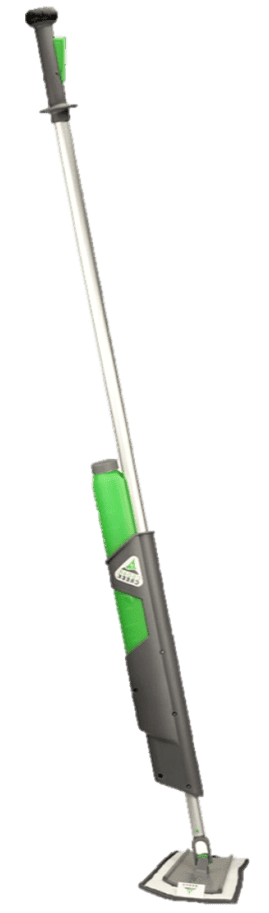
Traditional mopping may involve repeated arm movements, gripping, twisting, and changing between floor surfaces.
Fas-Trak describes its FLUID-3D Mopping System as incorporating:
"An Easy-Grip Handle & Trigger for Dispensing on Demand"
The company also describes an ergonomically designed power grip and interchangeable cleaning tools for smooth and profiled floors.
Its Rocker Mop is marketed as reducing smooth-floor cleaning effort by 60%. That is a manufacturer claim, not an independently verified injury-reduction statistic.
For facility managers, the practical evaluation should focus on whether the system changes:
- Repeated wrist and arm movements
- Grip and dispensing demands
- Time spent changing tools
- Operator comfort during extended cleaning
- Cleaning consistency across different surfaces
Explore: Fas-Trak FLUID-3D Mopping System
FAS-EDGE: Reducing repetitive manual edge scrubbing

Floor edges, corners, and baseboards frequently require detailed cleaning that conventional floor equipment cannot complete.
Manual methods may involve kneeling, bending, or repeatedly applying pressure through a hand-held scrubbing tool.
Fas-Trak's FAS-EDGE is a three-headed, motorized buffer-scrubber designed for floor-edge and baseboard applications.
According to Fas-Trak's product information, each brush operates at 525 RPM, and the machine weighs approximately 36 pounds.
Those specifications make it a candidate for evaluating mechanized detail cleaning, but they do not independently establish a reduction in ergonomic injury risk.
During a demonstration, supervisors should compare the operator's posture, movement frequency, setup requirements, and total task completion time against the existing process.
Explore: FAS-EDGE Cleaning Equipment
Clean Spin: Evaluating overhead cleaning from floor level

High dusting can require sustained reaching, shoulder elevation, repositioning, and the use of ladders or other access equipment.
Fas-Trak identifies Clean Spin as a high-dust removal tool intended to help operators address elevated surfaces from floor level.
Its potential operational value is not simply reaching farther. It is changing the physical requirements of accessing overhead surfaces.
A facility evaluation should examine whether the tool reduces awkward reaching and equipment repositioning while still achieving the required cleaning standard.
Explore: Fas-Trak Cleaning Equipment Portfolio
FAS-VAC: Examining movement during vacuuming
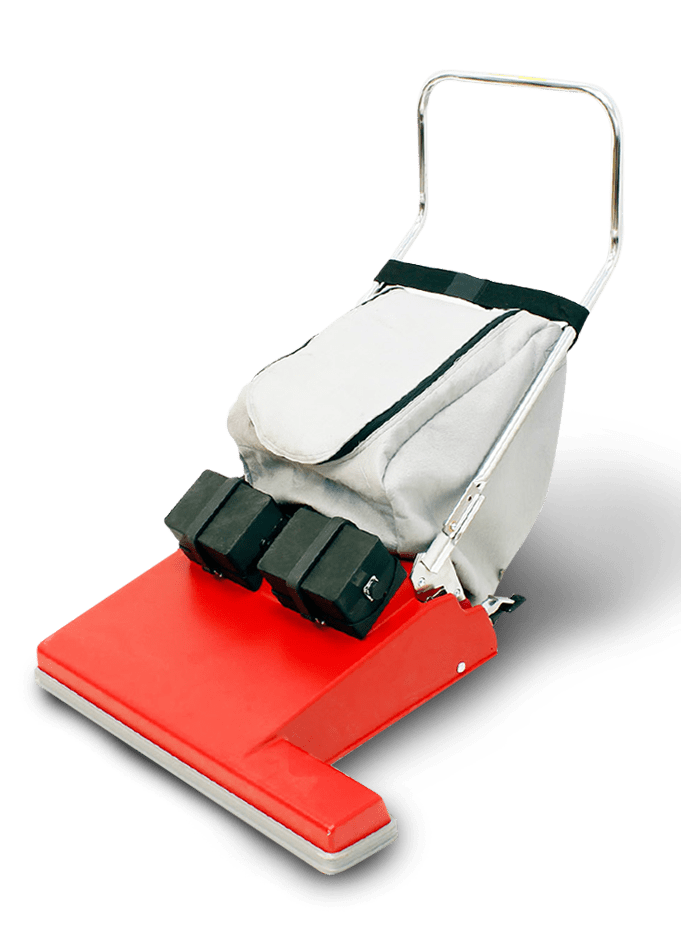
Vacuuming combines repeated pushing, pulling, directional changes, and movement through occupied or furnished spaces.
Fas-Trak positions FAS-VAC as a cordless cleaning option for commercial applications.
Its ergonomic suitability should be assessed through handle positioning, maneuverability, machine weight, floor transitions, and operator feedback.
Cordless operation may reduce cord-management interruptions, but it does not automatically reduce every physical demand associated with vacuuming.
Explore: Fas-Trak Equipment and Cleaning Solutions
Equipment Selection Is an Ergonomic Decision
The strongest equipment choice is not necessarily the lightest, fastest, or most technologically advanced machine.
It is the equipment that fits the task, surface, employee, and working environment.
Are your employees still performing physically demanding tasks that could be handled differently?
Fas-Trak can help your team examine existing workflows and arrange equipment demonstrations focused on practical improvements.
Discuss Your Cleaning Equipment Needs With Fas-Trak

3. Improve the Workflow Before Increasing the Pace
A common operational mistake is assuming productivity improves whenever employees complete a task more quickly.
Faster repetition can increase physical demands if the underlying task remains poorly designed.
An effective ergonomic review considers the entire workflow, including how employees retrieve supplies, transport equipment, access surfaces, complete cleaning, and transition between assignments.
OSHA recommends alternating stressful tasks, using appropriate wheeled equipment, limiting awkward postures, and selecting tools that support more neutral working positions.
A practical five-step ergonomic assessment
1. Observe the task. Record repeated bending, reaching, gripping, lifting, pushing, and pulling during normal operations.
2. Identify the source. Determine whether the physical demand comes from equipment design, task frequency, inaccessible surfaces, or inefficient workflow.
3. Evaluate alternatives. Consider redesigned procedures, better equipment, task rotation, and improved supply placement.
4. Test under realistic conditions. Include employees who routinely perform the task rather than relying exclusively on a sales demonstration.
5. Measure the results. Compare physical demands, cleaning quality, task time, operator feedback, and any new hazards introduced.
This approach is consistent with Fas-Trak's existing Operational Intelligence™ guidance in Cleaning Equipment Demonstrations: What Should You Measure?.
That article emphasizes evaluating the complete process, including setup, movement, cleanup, training, operator comfort, and total labor time.
4. Measure Ergonomic Improvements Alongside Productivity
A meaningful equipment evaluation should produce evidence that managers can use to make purchasing and operational decisions.
Consider a hypothetical floor-cleaning process.
An employee completes a recurring assignment in 40 minutes using a conventional method. A proposed equipment change reduces the process to 32 minutes while maintaining the required cleaning quality.
That represents an eight-minute improvement, or a 20% reduction in task time.
But the ergonomic evaluation is not finished.
Managers must also determine whether the new method changes wrist position, applied force, repeated movement, bending, equipment handling, and operator fatigue.
Equipment demonstration scorecard
| Evaluation measure | Existing method | Proposed method |
|---|---|---|
| Total task time | Record baseline | Measure change |
| Repetitive movements | Count or observe | Compare |
| Awkward postures | Identify frequency | Compare |
| Applied force | Assess task demands | Compare |
| Setup and cleanup | Measure time | Measure time |
| Cleaning quality | Verify standard | Verify standard |
| Operator feedback | Document concerns | Record experience |
A faster task is not automatically a safer task. Similarly, a more comfortable tool does not necessarily improve productivity.
Both outcomes should be examined independently.
For further guidance, see Fas-Trak's The New Economics of Facility Cleaning, which connects equipment decisions to labor, workflow, and measurable operational performance.
5. Build Ergonomics Into Equipment Purchasing Decisions
Ergonomics should not be treated as an afterthought once equipment has already been purchased.
Safety managers and facility leaders should participate in evaluating equipment before adoption, particularly when new systems change established work practices.
A structured review should address:
- Whether the tool fits the task and the operator
- Whether employees can maintain appropriate working positions
- How much force is required during routine use
- Whether the equipment introduces new handling or vibration concerns
- How easily operators can learn and consistently repeat the process
- Whether maintenance requirements create additional physical demands
The National Institute for Occupational Safety and Health (NIOSH) has extensively documented the relationship between occupational physical demands and musculoskeletal disorders.
Its research reinforces the importance of examining repetition, force, posture, and exposure rather than relying on a single ergonomic feature.
Facility leaders should also involve employees directly. The people performing the work can often identify practical difficulties that are not apparent from specifications or short demonstrations.
Fas-Trak's Why the Best Facility-Service Partners Bring Ideas—Not Just Products expands on this approach by emphasizing operational problem-solving, demonstrations, and post-purchase support.
The purchasing decision should answer a measurable operational question—not simply introduce another machine into the facility.
6. Turn Ergonomic Concerns Into Measurable Operational Improvements
Repetitive-motion exposure cannot always be eliminated from commercial cleaning.
However, facility leaders can often improve how physically demanding tasks are organized and performed.
The most effective strategy combines appropriate equipment, thoughtful workflow design, employee participation, and objective evaluation.
For Fas-Trak, this is the purpose of Operational Intelligence™: connecting equipment decisions to the real conditions under which cleaning work occurs.
The Cost of Repetitive Motion Goes Beyond Employee Fatigue
Repetitive motion in commercial cleaning is not simply an occupational safety concern. It is an operational challenge that deserves the same level of scrutiny as labor costs, equipment performance, and cleaning quality.
Every unnecessary movement, awkward working position, and physically demanding manual process represents an opportunity to evaluate how work is being performed. When these demands are repeated across multiple employees, shifts, and facilities, their cumulative impact deserves management attention.
For facility executives, EVS directors, and commercial cleaning contractors, the objective should not be to demand greater physical output from employees. It should be to design cleaning operations that require less unnecessary effort while delivering consistent, measurable results.
That means moving beyond equipment specifications and asking more consequential questions:
- Are our current cleaning methods creating avoidable ergonomic exposure?
- Could mechanized equipment reduce physically demanding manual tasks?
- Are we evaluating total task performance or simply the purchase price of equipment?
- Can we demonstrate measurable improvements in both worker experience and operational efficiency?
These are the questions that should guide modern cleaning equipment investments.
Better Equipment Decisions Begin With Better Operational Questions
Fas-Trak's Operational Intelligence™ approach encourages facility leaders to examine the relationship between equipment, employees, and workflow performance.
Solutions such as FLUID-3D, FAS-EDGE, Clean Spin, and FAS-VAC provide opportunities to evaluate alternative cleaning methods for tasks involving repeated mopping, manual scrubbing, overhead reaching, and vacuuming.
The right solution depends on the facility, the application, and the measurable results—not simply the machine's capabilities.
The greatest opportunity is not necessarily cleaning faster. It is eliminating unnecessary effort from the process.
Put Your Cleaning Workflow to the Test
If your organization is investing significant labor hours in repetitive cleaning tasks, it may be time to examine whether your current equipment is supporting your employees—or creating additional physical demands.
Fas-Trak can help your team explore equipment options and arrange practical demonstrations focused on your facility's cleaning requirements.
Before your next equipment investment, evaluate what your current process requires and what an improved process could accomplish.
Request an Equipment Demonstration or Consultation With Fas-Trak
Frequently Asked Questions: Cleaning Ergonomics and Operational Risk
1. How can facility managers quantify ergonomic exposure in repetitive commercial cleaning tasks?
Facility managers can evaluate task frequency, duration, force requirements, working posture, and recovery opportunities using structured observational assessments. Tools such as the Rapid Entire Body Assessment (REBA) and Rapid Upper Limb Assessment (RULA) can help identify postural concerns, while NIOSH lifting assessment methods may be appropriate for applicable manual lifting tasks. No single tool captures every cleaning-related exposure, so assessments should match the task and be supported by employee feedback and operational observations.
2. What performance indicators should be measured when evaluating ergonomic cleaning equipment?
A meaningful equipment evaluation should examine task completion time, movement frequency, forceful exertions, awkward postures, setup requirements, cleaning quality, and operator feedback. Managers should also evaluate equipment maintenance, training requirements, and total cost of ownership. Comparing these measures before and after implementation helps determine whether a proposed solution delivers operational improvements without introducing new ergonomic concerns.
3. Can ergonomic equipment investments produce measurable financial returns beyond labor savings?
Potentially. Financial benefits may include reduced task time, improved equipment utilization, fewer workflow interruptions, and lower maintenance or replacement costs. Reduced injury-related expenses may also be relevant, but should not be assumed without supporting workplace data. A defensible ROI calculation should distinguish verified savings from projected benefits and account for equipment acquisition, training, maintenance, and useful service life.
4. How should commercial cleaning contractors evaluate ergonomic risk when staffing levels or cleaning frequencies change?
Changes in staffing or cleaning frequency can alter individual workload, repetition, and recovery opportunities. Managers should reassess task duration, work pace, equipment availability, and employee exposure whenever operating conditions change. A revised staffing plan that maintains cleaning output but substantially increases repetitive physical demands may require additional workflow controls or equipment adjustments.
5. What is the relationship between cleaning equipment design and OSHA's General Duty Clause?
Under Section 5(a)(1) of the Occupational Safety and Health Act, covered employers must provide workplaces free from recognized hazards likely to cause death or serious physical harm. OSHA does not prescribe one universal ergonomic equipment standard for commercial cleaning. However, recognized musculoskeletal hazards may warrant corrective action, and equipment design can be one component of an employer's broader risk-control strategy. Purchasing equipment marketed as ergonomic does not independently establish regulatory compliance.
6. When should mechanized cleaning replace repetitive manual cleaning methods?
Mechanization deserves consideration when manual tasks involve sustained force, frequent repetition, awkward positioning, or substantial labor demands. However, the decision should account for surface compatibility, equipment maneuverability, access limitations, operator training, cleaning quality, and total ownership costs. A controlled demonstration can determine whether mechanization improves the specific process rather than merely shifting physical demands to another activity.
7. How can facility leaders determine whether ergonomic improvements are sustainable across multiple shifts or locations?
Standardized task observations, consistent equipment procedures, employee training, preventive maintenance, and periodic reassessment help maintain improvements. Managers should compare performance across representative operators, shifts, and facility conditions. Results from one demonstration should not automatically be assumed to apply across an entire organization.
8. What should an executive-level business case for ergonomic cleaning equipment include?
An executive-level proposal should define the existing operational problem, document relevant ergonomic exposures, compare alternative solutions, and present measurable performance criteria. It should include acquisition and lifecycle costs, implementation requirements, projected productivity changes, and a plan for validating results. Where appropriate, facility leaders should also address employee acceptance, training, maintenance support, and how the investment aligns with organizational safety and operational objectives.
