Cleaning Ergonomics: Reduce Repetitive Motion | Fas-Trak
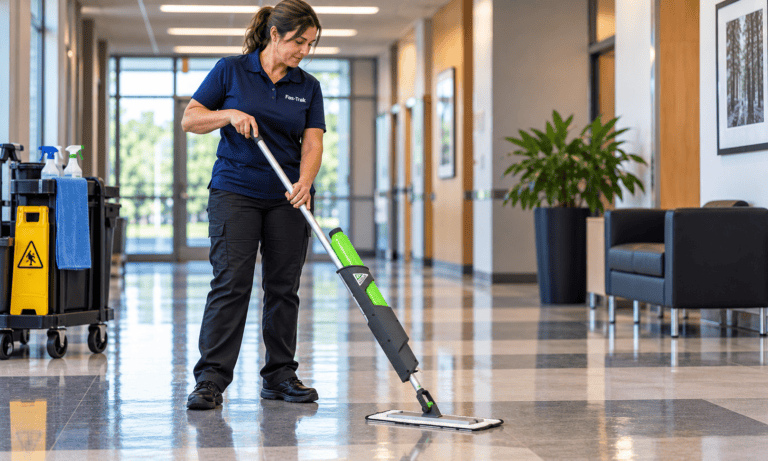
Learn how to reduce repetitive motion in commercial cleaning through better ergonomics, smarter workflows, and Fas-Trak equipment solutions.
Learn how to reduce repetitive motion in commercial cleaning through better ergonomics, smarter workflows, and Fas-Trak equipment solutions.

Discover five factors that affect commercial cleaning equipment productivity and use a practical scorecard to evaluate equipment and labor costs.
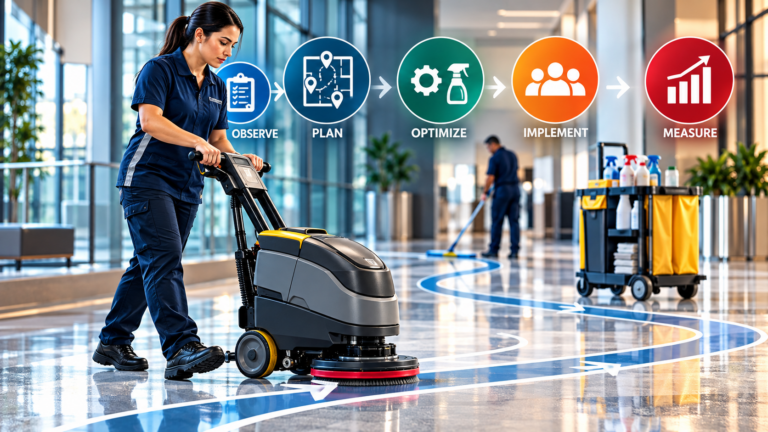
How Cleaning Workflow Design Can Improve Facility Productivity FAS-TRAK | OPERATIONAL EFFICIENCY SERIES · OCTOBER 12, 2026 Estimated read time 8–10 minutes Executive Brief Commercial cleaning productivity is often evaluated through labor hours, staffing levels, equipment costs, and the amount…
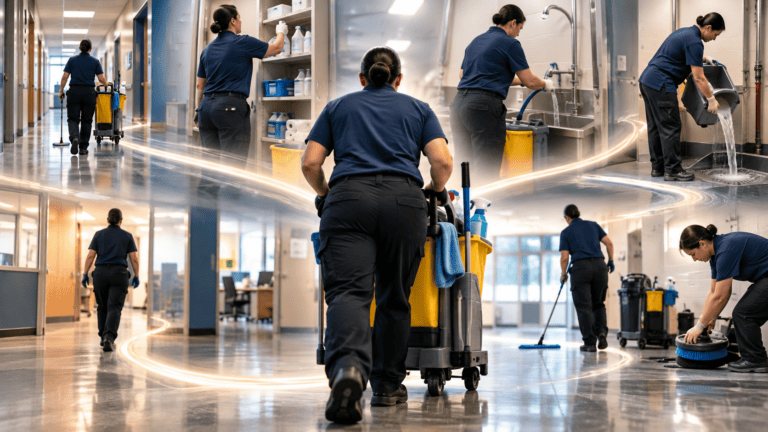
Where Custodial Teams Lose the Most Time During a Cleaning Shift Estimated Read Time: 7–8 Minutes Custodial productivity is not simply a measure of how quickly employees clean. During a typical shift, labor time is also consumed by travel, filling…
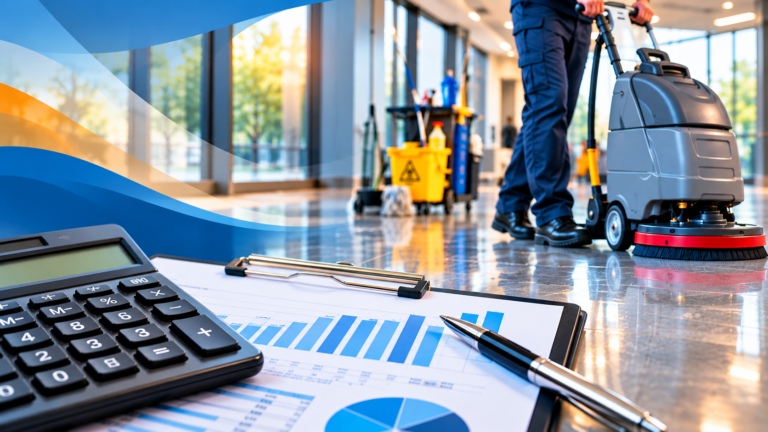
The true cost of a commercial cleaning task is calculated by combining fully loaded labor, consumables, equipment cost per use, setup and travel time, refills or changeovers, and expected rework. Multiply the resulting cost per task by annual task frequency to estimate the workflow's annual operating cost.
Formula:
True Cost Per Task = Labor + Consumables + Equipment + Setup/Travel + Refills/Changeovers + Rework
Annual Workflow Cost = True Cost Per Task × Annual Task Frequency
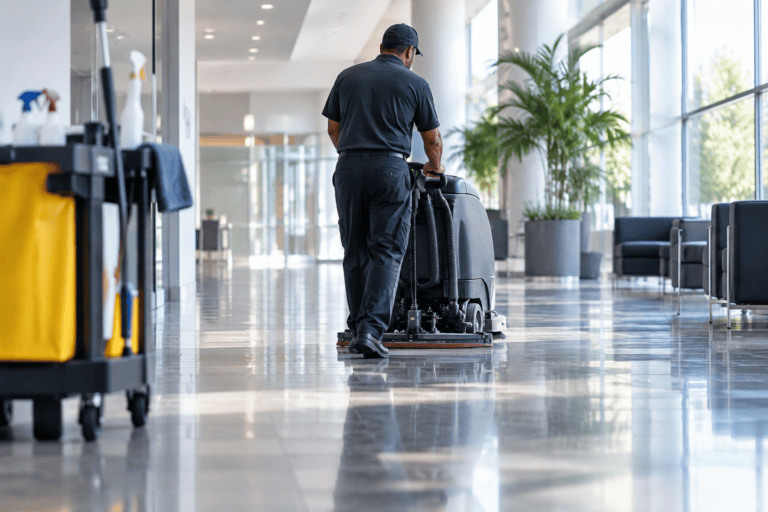
Commercial cleaning labor costs continue to rise, but wages aren't the only factor affecting facility budgets. Walking, setup, refilling, equipment changes, and rework can quietly consume valuable labor hours. Learn how examining the cleaning workflow can reveal opportunities to improve efficiency without sacrificing cleaning standards.

Use five facility walkthrough questions to uncover labor bottlenecks, chemical waste, access problems, inconsistent results, and recurring cleaning complaints.
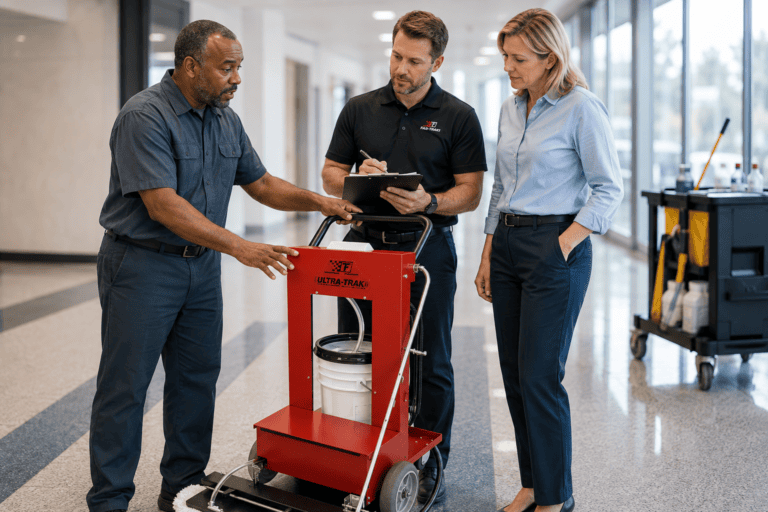
The purchase order isn't the end of the customer relationship. Fas-Trak Operational Intelligence™ examines how training, operator coaching, parts availability, troubleshooting and periodic process reviews help transform equipment vendors into long-term problem-solving partners.

A commercial cleaning-equipment demonstration should compare the proposed solution with the facility's existing process under realistic conditions. Measurements can include setup time, total task time, square footage completed, refill frequency, employee movement, physical demands, material use, application consistency, detail work, cleanup time, rework, operator feedback, training requirements, and finished quality. The goal is not simply to demonstrate that equipment works—it is to determine whether the complete process measurably improves.
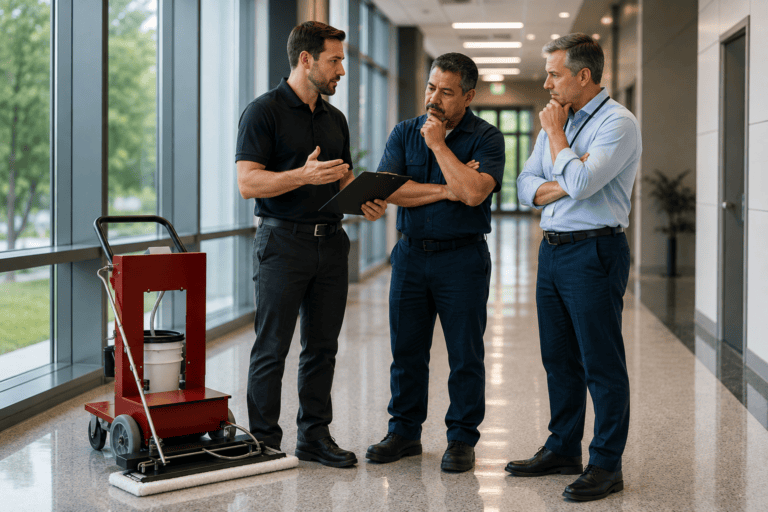
A great facility-service partner does more than supply cleaning products or equipment. The strongest partners understand a customer's workflow, labor demands, safety concerns, quality expectations and operating costs before recommending a solution. Facility walkthroughs, employee conversations, process measurements, demonstrations and follow-up support allow distributors and representatives to move from transactional selling toward long-term operational problem-solving.