


Operational Intelligence™ Executive Brief
⏱️60 Second Read
Primary Audience: Facility managers, EVS leaders, maintenance directors, distributors, manufacturers’ representatives, commercial cleaning professionals
Core Focus: Training • Operator Coaching • Parts • Troubleshooting • Process Reviews • Customer Retention
The Sale Is the Beginning of the Operational Relationship
The Operational Challenge
A successful equipment demonstration can earn an order.
It cannot guarantee successful implementation.
The real test begins when the equipment enters the facility, different employees begin using it, operating conditions change, questions arise, components eventually wear, and the customer must integrate a new process into everyday operations.
That is where the difference between a vendor and an operational partner becomes visible.
A vendor completes the transaction.
A problem-solving partner stays engaged long enough to help the customer turn the purchase into a repeatable working process.
Why It Matters
Equipment value isn't determined only on purchase day.
It is influenced by what happens afterward:
- Are employees properly trained?
- Can new employees be brought up to speed?
- Can operators get help when technique begins to drift?
- Are manuals and training resources accessible?
- Can replacement parts and consumables be identified?
- Can someone help troubleshoot a problem?
- Does anyone return to determine whether the process is delivering the expected result?
Fas-Trak publicly identifies local representation, extensive video training, and service after the sale among the principles guiding the company. Its website says its representatives are trained to assist teams with application and care, and that its Operations Manager is directly available to assist customers.
Facility Manager Takeaway
When evaluating a supplier, don't ask only:
“What does the equipment cost?”
Also ask:
“What happens after we buy it?”
Distributor & Representative Takeaway
The purchase order closes the sale.
What happens next determines whether you become the customer's next call.
Read More
Estimated Read Time: 11–13 minutes
⬇️⬇️⬇️⬇️
The Most Important Part of the Customer Relationship May Begin After the Invoice
A piece of equipment can perform beautifully during a demonstration.
The customer can understand the value.
The employees can be enthusiastic.
The purchasing department can approve the investment.
And then something happens that receives far less attention:
Monday morning arrives.
The manufacturer's representative isn't standing beside the operator anymore.
The facility manager has another building problem to solve.
The maintenance crew has a schedule to finish.
And the equipment now has to perform as part of an actual operating system.
This is where customer relationships are either strengthened—or slowly lost.
Because customers don't experience equipment as a specification sheet.
They experience it through hundreds of ordinary interactions:
Setup. Operation. Adjustment. Cleaning. Storage. Training. Maintenance. Troubleshooting. Replacement parts. New employees. New applications.
A supplier who disappears after delivery leaves the customer to solve those problems alone.
A problem-solving partner sees them as part of the relationship.
That is Operational Intelligence™ after the sale.
Also Read 📖Cleaning Equipment Demonstrations: What Should You Measure? | Fas-Trak
What Does Good After-Sale Support for Commercial Cleaning Equipment Include?
Good after-sale support for commercial cleaning and coating equipment should include initial and follow-up training, operator coaching, accessible operating instructions, troubleshooting assistance, replacement-parts support, maintenance guidance, and periodic reviews of how the equipment is performing in the customer's actual workflow. The objective is not simply to keep equipment running; it is to help the facility preserve the operational improvements the equipment was purchased to create.
The Sale Is a Handoff—Not a Finish Line
Think about what has happened before the purchase.
A strong representative has:
Observed the operation.
Identified the problem.
Established a baseline.
Demonstrated an alternative.
Measured the result.
Helped the customer make a decision.
Then the equipment arrives.
Why would the Operational Intelligence™ process suddenly stop?
It shouldn't.
The next phase is implementation.
And implementation asks a different set of questions:
Can the facility reproduce what happened during the demonstration?
Can multiple operators produce consistent results?
Does the equipment remain part of the intended workflow?
Are employees using it correctly?
Are small problems being corrected before they become larger ones?
Can replacement parts and operating information be found when needed?
And months later:
Did the operational improvement actually stick?
That last question matters.
Because selling an improvement and sustaining an improvement are not the same thing.
Also Read 📖Why the Best Facility-Service Partners Bring Ideas—Not Just Products
The Five Foundations of the After-Sale Relationship
A useful way to think about post-sale Operational Intelligence™ is through five interconnected responsibilities:
TRAIN → COACH → SUPPORT → RESTORE → REVIEW
Each protects a different part of the customer's investment.

Also Read 📖The New Economics of Facility Cleaning
1. TRAIN: Equipment Delivery Is Not Employee Training
Showing someone where the switch is isn't training.
Neither is demonstrating the equipment once while employees watch.
Training should help an operator understand:
- What the equipment is intended to accomplish
- How it fits into the facility's workflow
- Proper setup
- Correct operating technique
- Adjustments
- Application-specific considerations
- Cleaning and care
- Storage
- Basic maintenance
- Common mistakes
- What to do when something doesn't seem right
That distinction matters with systems such as Ultra-Trak Plus.
Fas-Trak provides an Ultra-Trak training video through its coating-applicator resources as well as an owner's manual covering operation and maintenance.
Those resources matter because equipment knowledge shouldn't exist only inside the representative's head.
It should remain accessible to the facility.
Operational Intelligence™ Principle
Don't just train someone to operate the machine.
Train them to understand the process the machine is supposed to improve.
That creates a very different operator.
Instead of simply knowing how to use the equipment, the employee understands why the process was changed.
That helps protect the operational improvement identified during the demonstration.
2. COACH: Because Technique Drifts
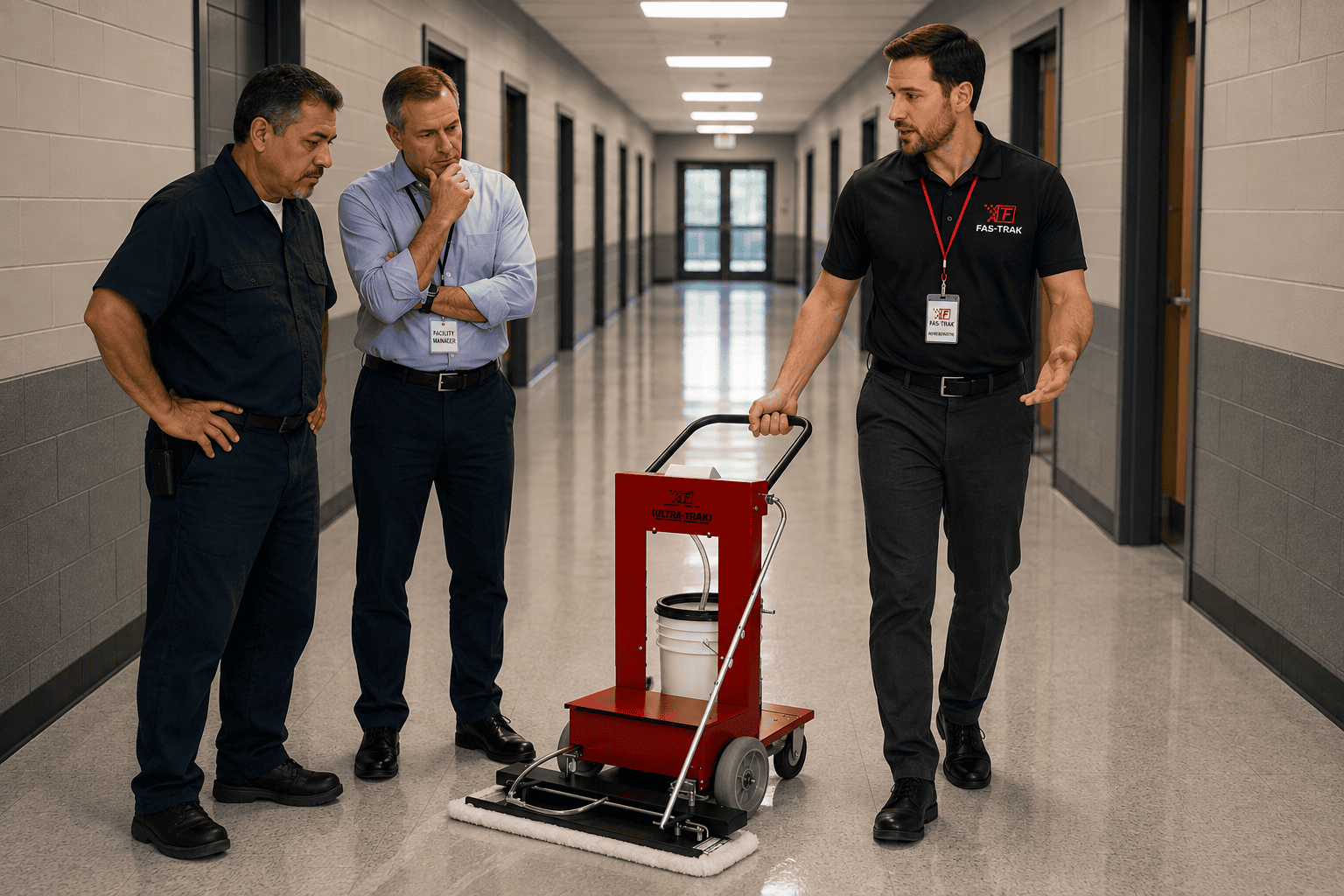
Here's something almost every facility has experienced.
Training happens correctly.
Then time passes.
One employee develops a shortcut.
Another employee learns by watching that employee.
A third employee modifies the shortcut.
Six months later, management wonders why results aren't what they were during implementation.
The equipment hasn't necessarily changed.
The process has.
This is why operator coaching is different from initial training.
Training says:
“Here's how.”
Coaching asks:
“Show me how you're doing it now.”
That distinction can uncover:
- Incorrect setup
- Poor operating posture
- Unnecessary movement
- Incorrect adjustment
- Excessive overlap
- Inconsistent application
- Improper cleanup
- Avoidable wear
- Workarounds employees created to solve another problem
Sometimes the answer isn't another product.
It's a five-minute correction.
That five-minute conversation can be one of the most valuable services a representative provides.
Also Read 📖Why Are Cleaning Results Inconsistent? Fas-Tabs Create Controlled Outcomes
Frontline Employees Are Part of the Support System
The people performing the task often see problems first.
They know when something feels different.
They know when setup becomes cumbersome.
They know when a component isn't behaving normally.
They know when a process that worked well in one area becomes difficult in another.
So post-sale visits shouldn't consist only of a conversation with management.
Talk with the operators.
Ask:
How is it working?
What's easier?
What's still difficult?
Has anything changed?
Are there areas where you don't use it? Why?
What questions have come up since training?
That feedback is operational intelligence.
Also Read 📖Is a Cordless Wide Area Vacuum the Key to Cutting Labor Costs?
3. SUPPORT: Make Help Easy to Find
The moment a customer has a problem is not the moment they should begin figuring out who supports the equipment.
Support pathways should be established during implementation.
The facility should know:
Who do we call?
Where is the manual?
Where are the training videos?
How do we identify the equipment model?
How do we identify a replacement component?
Who can help us troubleshoot?
Fas-Trak's current site explicitly promotes “Service After the Sale” and says the main phone number routes directly to its Operations Manager for assistance. The site also provides product-specific manuals, training resources and product information.
That is important.
Support shouldn't be a scavenger hunt.
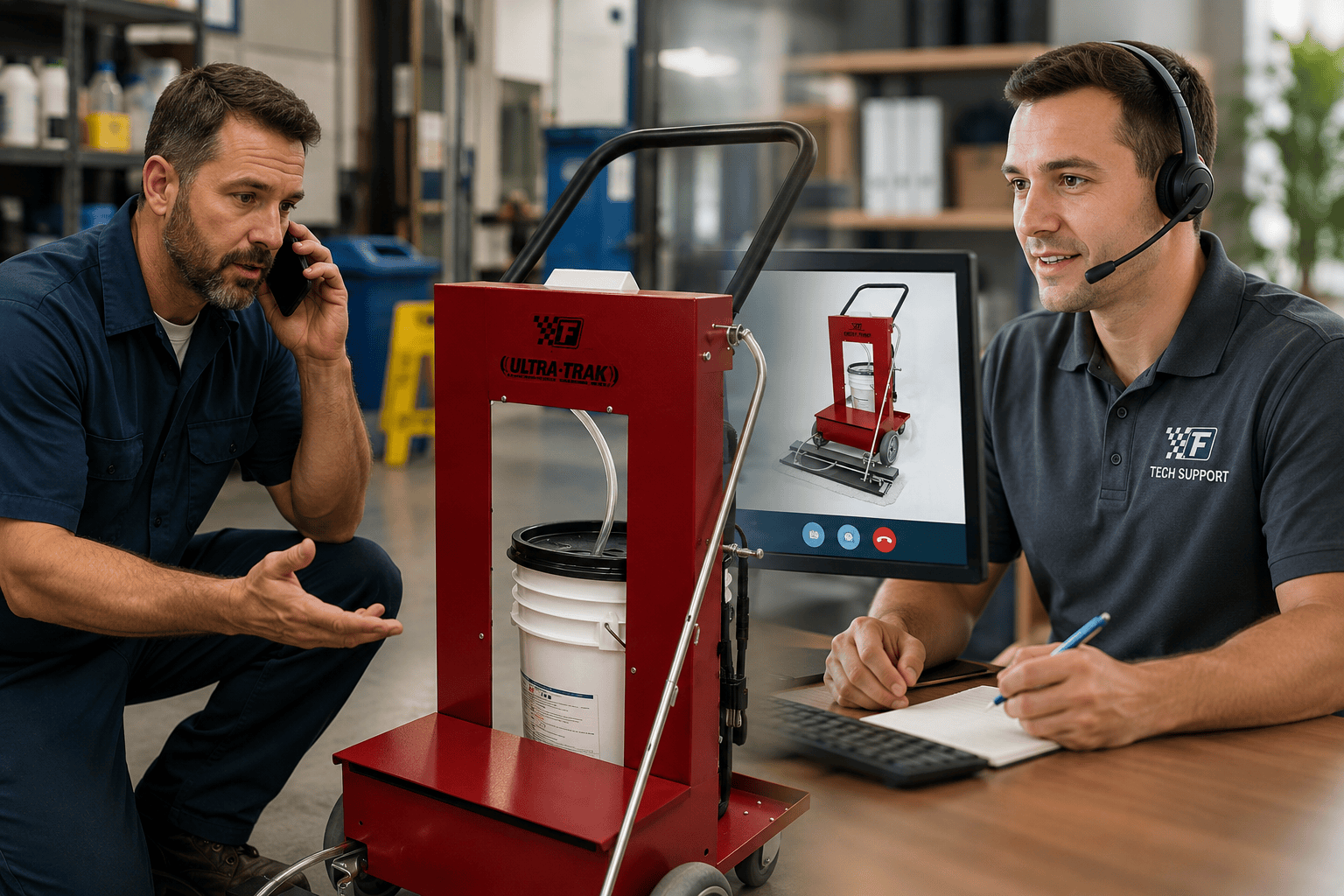
Contact for Support
4. RESTORE: Parts Availability Is Operational Continuity
Parts support sounds like a purchasing issue.
It isn't.
It is an uptime issue.
Suppose a piece of cleaning equipment eliminates significant labor from a recurring process.
A component eventually wears or is damaged.
If the facility cannot quickly determine:
- What failed
- Whether it can be replaced
- Which part is required
- Who supplies it
- How the repair should be handled
the facility may revert to its old process.
Now the operational improvement disappears while the equipment sits unused.
This is why parts availability belongs in the Operational Intelligence™ conversation.
Fas-Trak's product materials demonstrate this support structure in practical ways. For example, its current ACTIV8 manual contains a dedicated spare-parts list with individual part numbers for brushes, assemblies, power components, covers, motor/gearbox components and other service items.
The Ultra-Trak product page similarly identifies base units, applicator heads, covers and other accessories by specific part number.
That information helps move a customer from:
“Something broke.”
to:
“We know what we need.”
Much faster.
Operational Intelligence™: The Cost of Downtime Is Bigger Than the Part
Consider the complete consequence of an unavailable piece of equipment.
The replacement component might cost relatively little.
But downtime can potentially create:
Equipment Down → Old Process Returns → Labor Increases → Schedule Changes → Productivity Falls
So the relevant question isn't only:
“How much does the replacement part cost?”
It is:
“How quickly can we restore the intended process?”
That is an operational question.
Also Read 📖Fas-Trak Labor Savings Analysis | Floor Coating Efficiency & Cost Reduction
5. REVIEW: Return to the Original Problem
This may be the most overlooked step of all.
Go back.
Not because something is broken.
Not because the customer complained.
Go back because you want to know whether the original improvement survived implementation.
Remember the problem discovered before the sale?
Return to it.
If the demonstration established a measurable improvement, revisit the same measures.
For example:
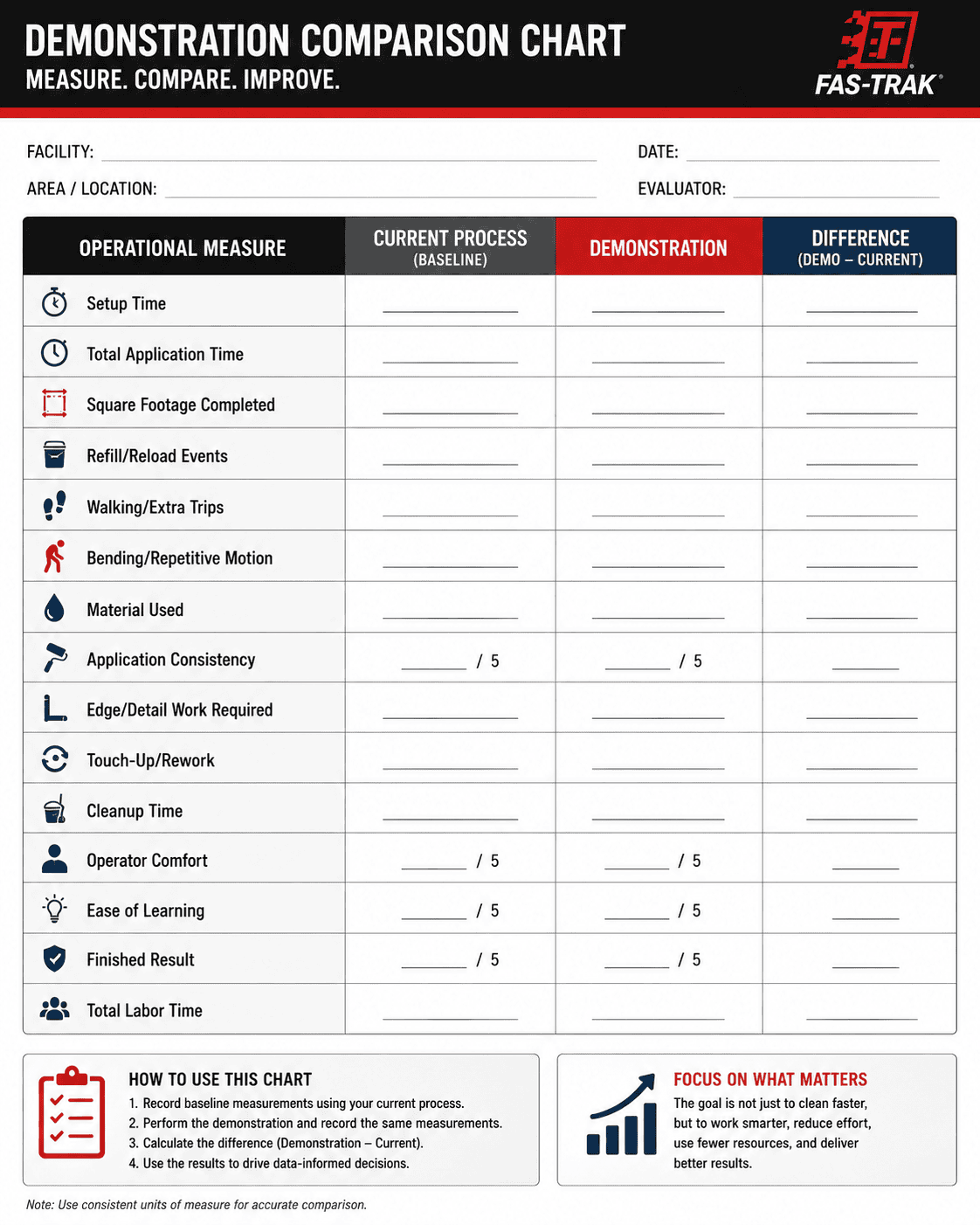
Now we're asking something much more sophisticated than:
“How do you like the machine?”
We're asking:
“Did the improvement hold?”
That is the post-sale version of the Demonstration Delta™ we introduced in Article 03.
Introducing the Operational Intelligence™ Value Retention Review
The demonstration establishes potential value.
Implementation begins capturing it.
Support helps preserve it.
So let's give the periodic review a clear purpose:
The Value Retention Review™
A Value Retention Review™ asks whether the operational gains identified during evaluation are still present after the equipment becomes part of everyday work.
The review doesn't have to be complicated.
Ask five questions:
1. Is the equipment being used as intended?
If not, why?
2. Are operators following the trained process?
If not, where has technique drifted?
3. Are the original operational improvements still measurable?
Compare against the baseline.
4. Has anything changed?
Employees, floor conditions, chemicals, schedules, workload and facility requirements can all change.
5. What support is needed next?
Training?
Parts?
Technique correction?
A different accessory?
A process adjustment?
Nothing at all?
That last answer is perfectly acceptable.
The purpose of a review isn't to manufacture another sale.
It is to protect the customer's existing investment.
Home
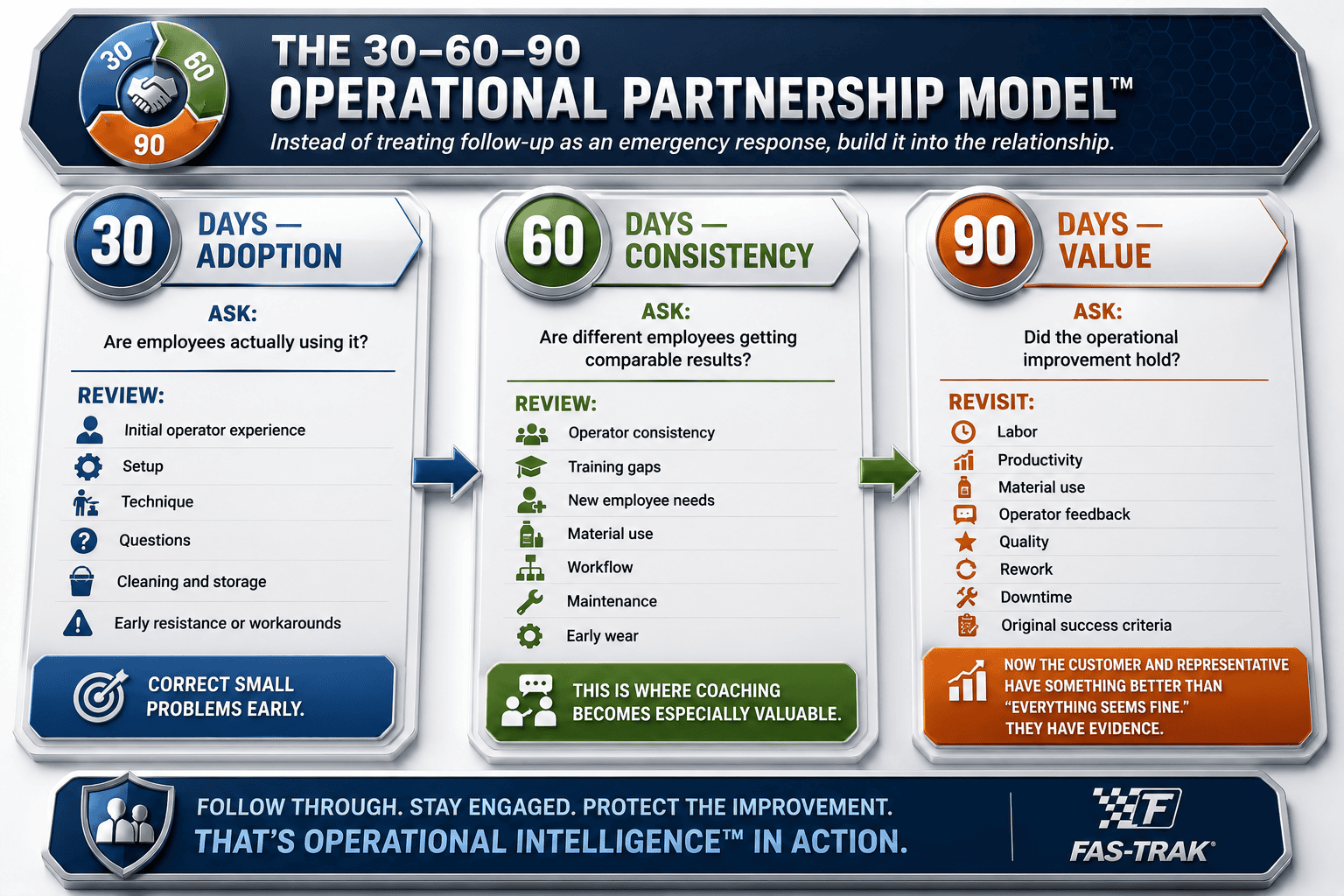
Standout Element: The Operational Intelligence™ After-Sale Partnership Scorecard
A facility can use this to evaluate a supplier before—and after—purchasing equipment.

The question isn't simply:
“Did they sell us good equipment?”
Ask:
“Are they helping us continue getting value from it?”
Also Read 📖Why the Best Facility-Service Partners Bring Ideas—Not Just Products
What Facilities Should Ask Before They Buy
The after-sale relationship should actually be discussed before the sale.
Facility managers should ask prospective suppliers:
✅Who trains our employees?
✅What happens when new employees join the team?
✅Are training videos available?
✅Can we access an owner's manual online?
✅Who handles troubleshooting?
✅How do we order replacement parts?
✅Which components are normally replaceable?
✅Who do we call when we have a question?
✅Will someone return after implementation?
✅Can we review whether the expected operational improvement actually occurred?
These questions reveal something a product specification never can:
What kind of company are we actually buying from?
What Representatives Should Ask After They Sell
The representative's questions should change after implementation.
Stop asking only:
“Do you need anything?”
That's easy to answer with:
“No.”
Instead ask:
✅“Which employees are using the equipment most often?”
✅“Show me how you're setting it up.”
✅“Has anything become more difficult?”
✅“Where aren't you using it?”
✅“How does your current task time compare with where we started?”
✅“Have you hired anyone who needs training?”
✅“Are you seeing wear anywhere?”
✅“Has your application or workflow changed?”
Those questions create conversations.
And conversations reveal problems before they become complaints.
Coating Applicators
Troubleshooting Is Relationship Building in Disguise
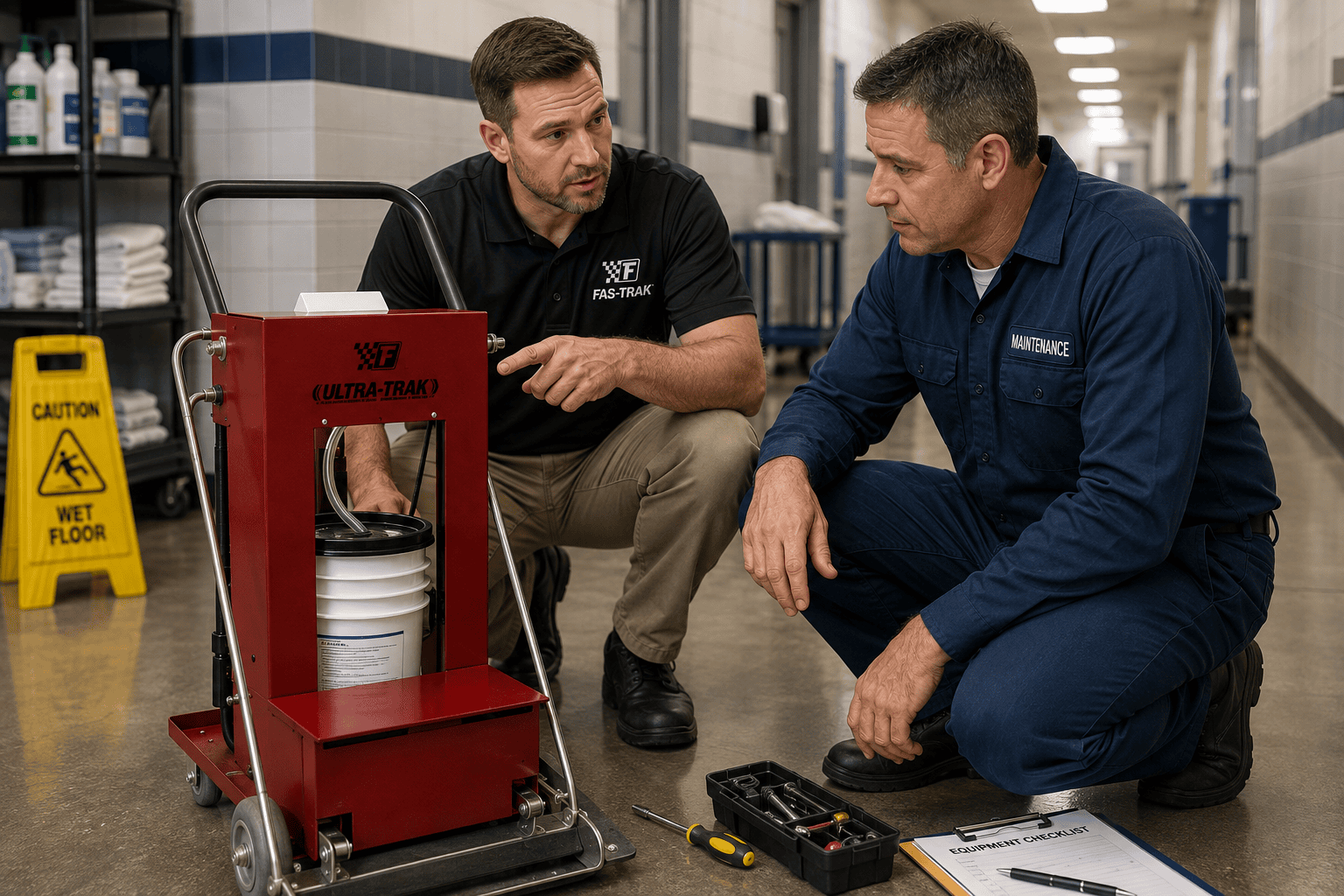
Nobody wants equipment to develop a problem.
But when it does, something important happens:
The customer discovers what the supplier relationship is actually worth.
A fast, knowledgeable response can reinforce confidence.
An unanswered phone call can undo months of relationship building.
That is why service after the sale is more than a customer-service department.
It is part of the brand.
Fas-Trak makes this commitment unusually visible on its own website: its stated principles include local representation, training and service after the sale, while its Contact page emphasizes accessibility and responsiveness.
The customer's problem doesn't care whether the sale closed six days ago or six years ago.
They simply need help solving it.
Cleaning Equipments
Customer Retention Is Usually Won Between Purchases
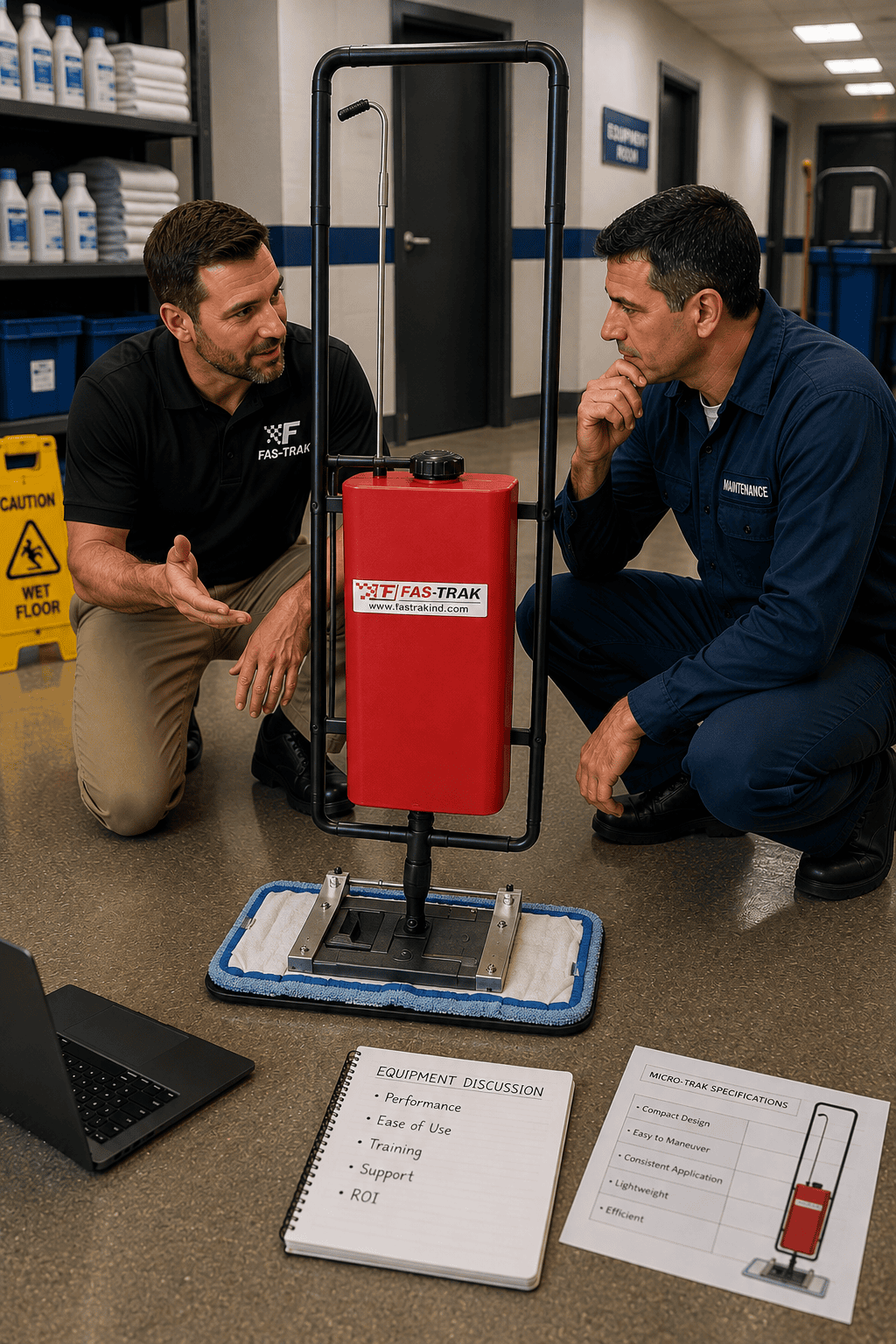
This is where the entire concept comes together.
Customer retention isn't primarily created when someone needs another machine.
By then, the relationship has already been tested.
Retention is created during all the smaller moments between purchases:
When an operator has a question.
When someone needs retraining.
When a part wears.
When management changes.
When a process stops producing the same result.
When a new employee needs instruction.
When the customer calls and a human being answers.
When the representative returns without immediately trying to sell something.
Those moments create institutional memory.
The facility begins to think:
“Call them. They'll know what to do.”
That sentence is worth far more than another product pitch.
Because now you aren't simply the company that sold the equipment.
You're part of how the facility solves problems.
Operational Intelligence™ for Distributors and Representatives
The Next Sale Should Be a Consequence of the Relationship—not the Purpose of It.
There is a temptation in sales to treat follow-up as another prospecting opportunity.
Customers recognize that quickly.
Operational Intelligence™ takes a different approach.
Return because you want to know:
Did it work?
Is it still working?
Can we help?
Sometimes the answer will lead to another product.
Sometimes it will lead to a replacement part.
Sometimes training.
Sometimes a process adjustment.
And sometimes:
“Everything is working perfectly.”
That's still a successful visit.
Because you've reinforced something more valuable than today's transaction.
You've reinforced trust.
From Demonstration Delta™ to Value Retention™
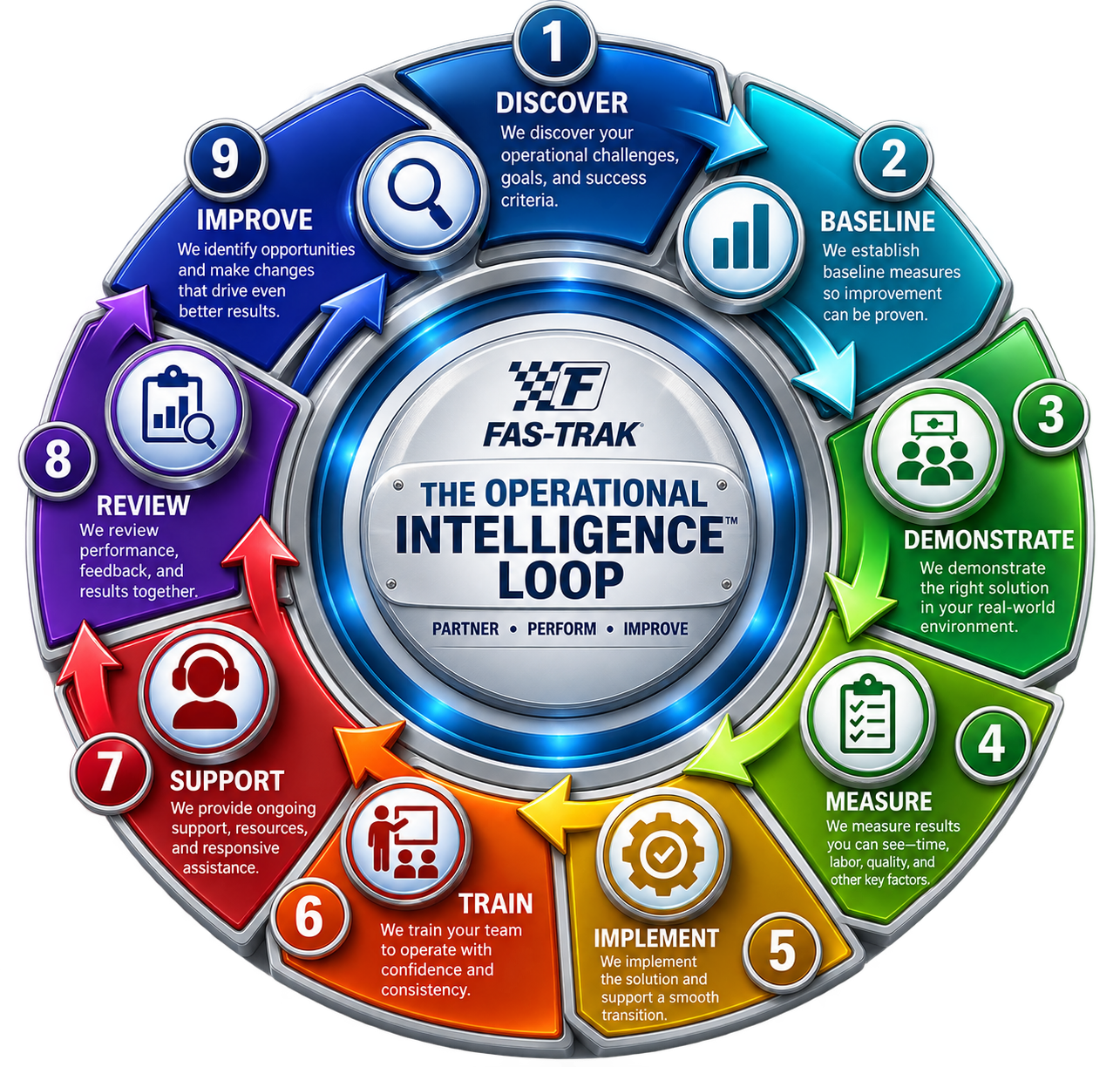
Article 03 asked:
What changed—and can we measure it?
Article 04 adds another question:
Did the improvement last—and what are we doing to protect it?
That completes an important Operational Intelligence™ loop:
Notice something?
There is no true endpoint.
That's because facility operations don't stand still.
Employees change.
Buildings change.
Budgets change.
Products change.
Expectations change.
And problems change.
A real operational partnership changes with them.
Don't Just Sell the Solution. Stay Long Enough to Help Make It Work.
The difference between a vendor and a problem-solving partner isn't determined by what happens during the sales presentation.
It's revealed afterward.
A vendor can deliver equipment.
A partner helps the customer successfully implement it.
A vendor can provide a manual.
A partner helps operators understand it.
A vendor can sell a replacement part.
A partner understands that restoring the equipment means restoring the customer's process.
A vendor asks whether the customer needs anything.
A partner returns to ask whether the improvement actually held.
That is how relationships are won after the sale.
And it is why Fas-Trak's emphasis on trained representation, product education, accessible support, parts and service belongs at the center of Operational Intelligence™—not on the sidelines. Fas-Trak's current resources include online training, operating manuals, product-specific components and direct support channels intended to help customers beyond the initial purchase.
The sale puts equipment in the facility.
Support turns that equipment into a long-term operational investment.
And when the next problem appears, the strongest measure of customer loyalty may be remarkably simple:
Who does the facility call first?
Ready to Build a Relationship That Continues After Delivery?
Whether you're evaluating Fas-Trak equipment, implementing a new process, training operators, looking for product information, or need help with equipment already in your facility, start the conversation with Fas-Trak.
Fas-Trak provides direct support along with online product information, training resources and manuals for its equipment.
Contact Fas-Trak → Talk With Fas-Trak

