

The Facility Walkthrough: Five Questions That Reveal Hidden Cleaning Costs
Estimated Reading Time:
6 minutes
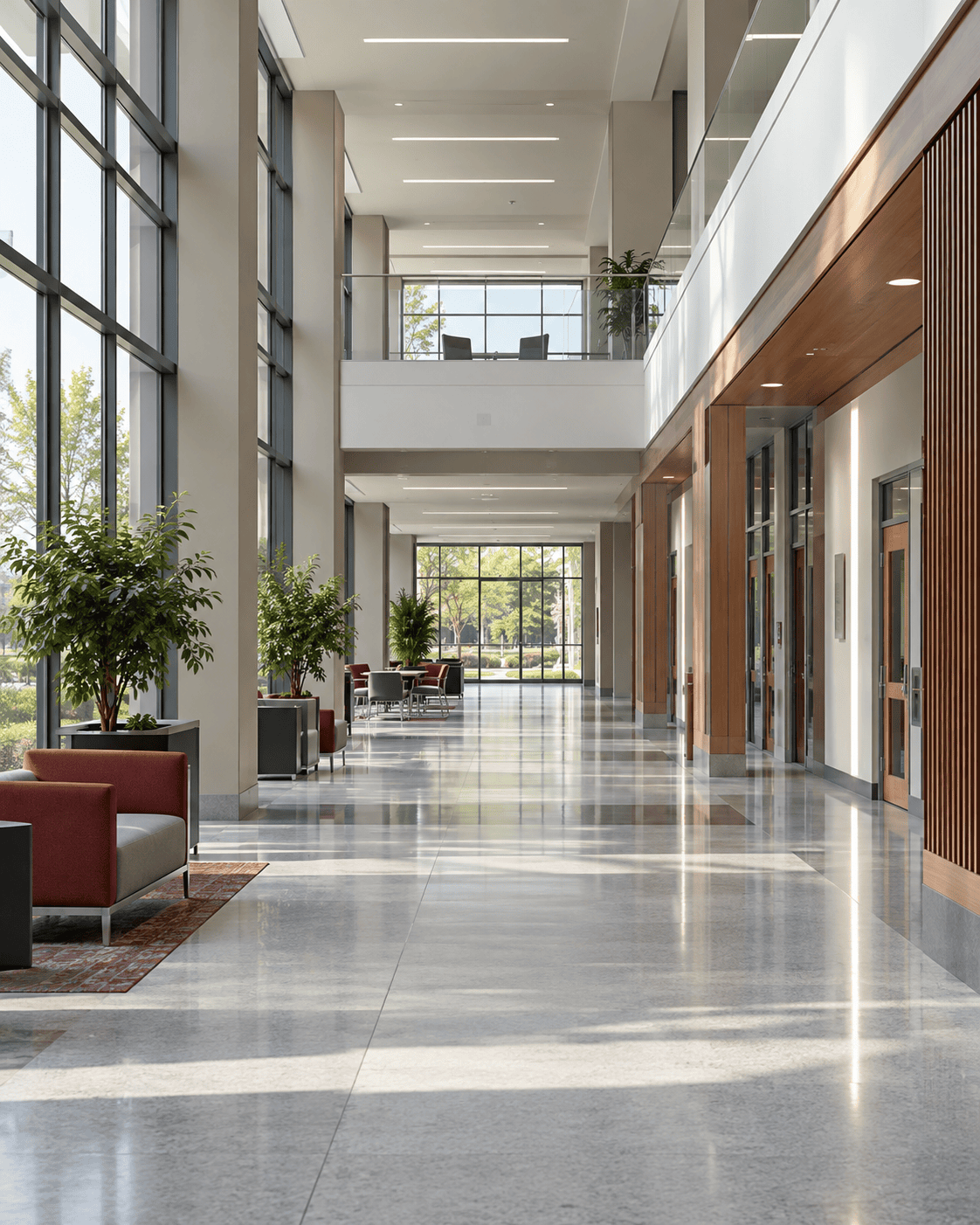 A facility can look clean while its cleaning program quietly wastes labor, chemicals, supplies, and management time.
The fastest way to find those losses is not to begin with a product recommendation. Begin with a structured facility cleaning walkthrough.
Observe how work moves through the building, ask operators where the process slows down, and compare the intended procedure with what actually happens during a shift.
Five questions usually expose the largest hidden costs:
- Where does labor stall?
- Where is product being wasted?
- Which surfaces are difficult to reach?
- Where do results change between employees or shifts?
- Which complaints keep returning?
Once those answers are visible, a distributor or facility-service partner can recommend a demonstration that addresses a documented problem instead of presenting equipment without context.
- A walkthrough should measure the cleaning process, not merely judge the building’s appearance.
- Hidden costs commonly appear as extra steps, unnecessary product use, difficult access, inconsistent results, or recurring complaints.
- The best equipment demonstration tests one observed problem against a clear operational baseline.
Why a Clean-Looking Facility Can Still Cost Too Much
Cleaning quality is often evaluated at the end of the process: the floor shines, the restroom smells acceptable, and the complaint log is quiet for the moment.
That view misses the effort required to produce the result.
A crew may be walking repeatedly for refills, applying more solution than necessary, reworking edges, or using ladders for routine dusting. The building looks acceptable, but the process consumes more time and material than it should.
A useful walkthrough follows the work.
Watch setup, travel, application, cleanup, and storage. Ask the employee performing the task what causes delays.
Record what can be measured:
- Minutes required to complete the task
- Number of refills
- Repeat passes
- Callbacks and corrections
- Product usage
- Areas left incomplete
These observations create the baseline needed for a meaningful equipment or process trial.
Also Read Effective Strategies for Reducing Cleaning Staff Turnover
Question One: Where Does Labor Stop or Repeat?
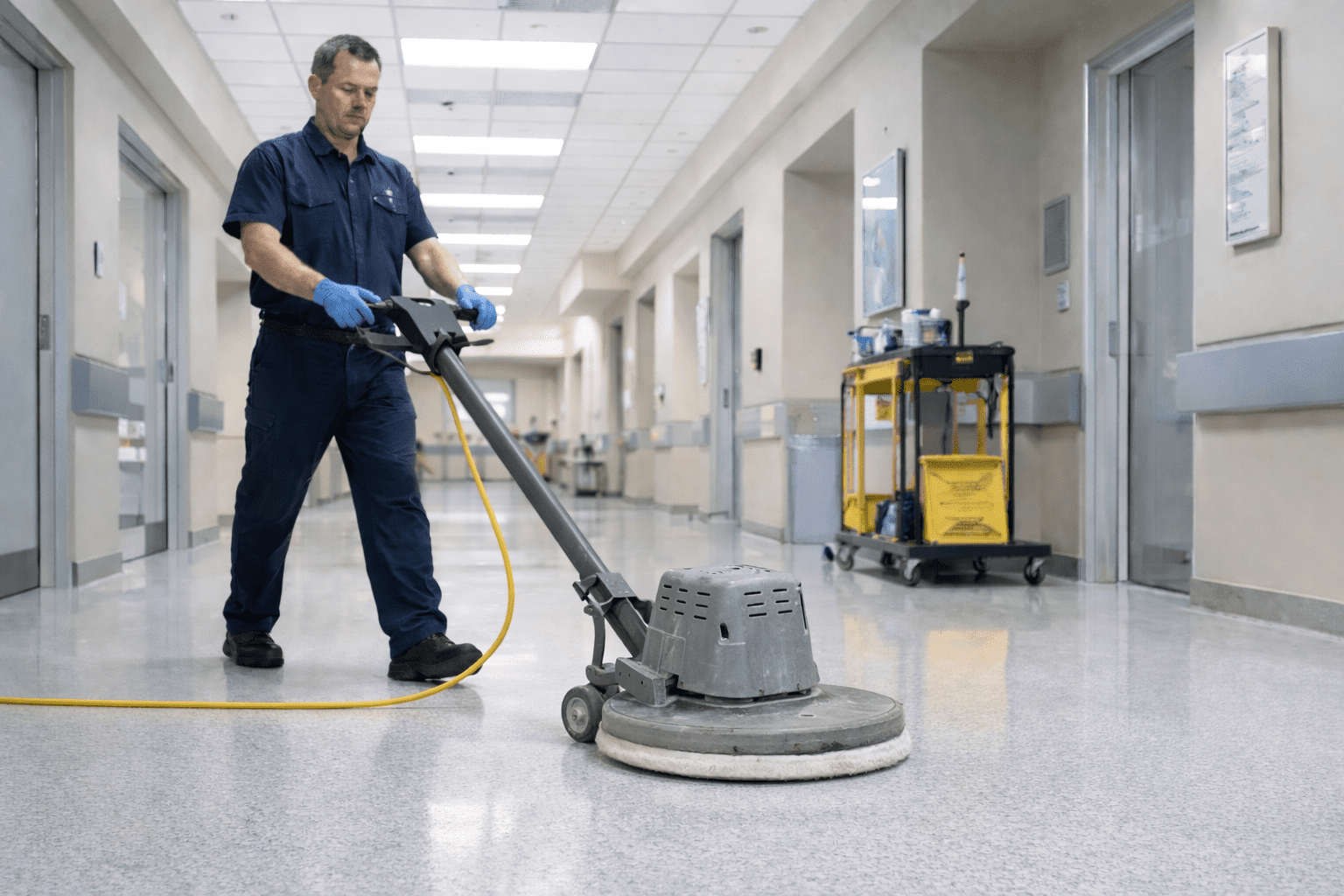
Labor bottlenecks often hide inside ordinary movements.
An employee leaves the work area to refill a container, changes outlets, untangles a cord, carries supplies between rooms, or repeats passes because the first pass did not provide full coverage.
Each interruption may take only a minute, but the same delay repeated across rooms, shifts, and buildings becomes a real operating cost.
During the walkthrough, follow one task from beginning to end. Count stops, refills, equipment adjustments, and repeated sections.
For floor coating work, compare the current application path with a controlled applicator trial. Fas-Trak states that its Ultra-Trak Plus can apply coatings at approximately 20,000 square feet per hour, while the Micro-Trak Plus can cover approximately 8,000 square feet per hour.
Those published production rates provide a starting point for a site-specific demonstration. They should not replace measurements taken under the facility’s actual conditions.
Also ReadFas-Trak Labor Savings Analysis | Floor Coating Efficiency & Cost Reduction
Question Two: Where Is Chemical or Product Being Wasted?
 Waste is not limited to visible spills.
It also appears as excessive overlap, inconsistent dilution, saturated applicators, discarded prepared solution, dried-out wipes, and products used more strongly than the task requires.
A walkthrough should compare the written procedure with actual preparation and application practices.
Observe how employees:
- Measure products
- Prepare solutions
- Dispense chemicals
- Carry prepared products
- Apply the solution
- Dispose of leftovers
Ask how much solution is prepared for a typical area and how much remains after the task is completed. Note whether application rates change depending on the operator.
Controlled dispensing and tablet-based preparation can reduce guesswork, but the correct recommendation depends on the surface, soil, product directions, and required result.
The goal is a repeatable process that uses the right amount—not simply the smallest amount.
Also Read Why Are Cleaning Results Inconsistent? Fas-Tabs Create Controlled Outcomes
Question Three: Which Surfaces Are Difficult to Reach?
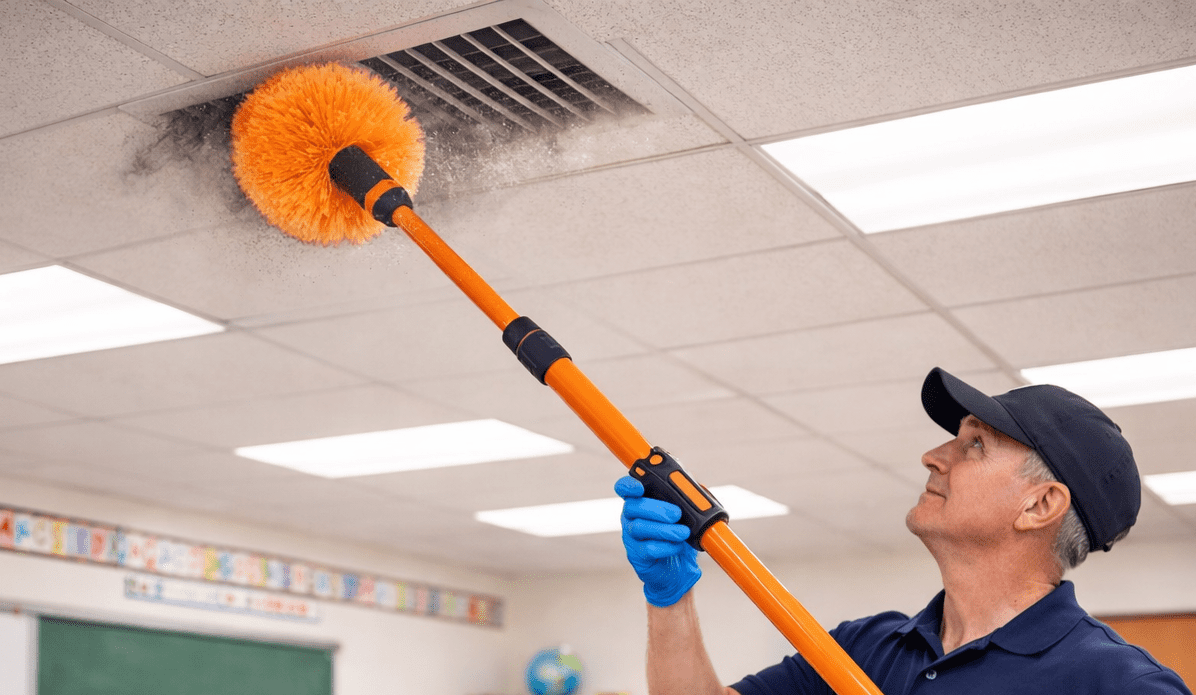
Inaccessible surfaces create two kinds of cost.
First, crews spend additional time moving ladders, furniture, cords, and tools. Second, some areas are skipped because the process is too disruptive or time-consuming.
Overhead dust on vents, beams, pipes, and lighting can remain unnoticed until it affects appearance or generates a complaint. Tight edges and corners may also require manual correction after the primary floor-cleaning task is finished.
During the walkthrough, identify every location that forces an employee to:
- Climb
- Bend
- Kneel
- Stretch
- Move furniture
- Change equipment
- Interrupt the normal workflow
Then determine whether the task can be completed from floor level or with a tool designed for that particular surface.
The Clean Spin high-dust removal tool, for example, is designed to help operators address overhead dust from floor level. Fas-Edge and the Fluid 3D system address other access and surface-contact challenges.
The walkthrough determines which physical limitation deserves a demonstration.
Also Read The New Economics of Facility Cleaning
Question Four: Where Do Results Change Between Employees or Shifts?

If one employee produces a strong result and another struggles with the same assignment, the problem may be the process rather than the employee’s effort.
Variation can result from:
- Dilution differences
- Equipment setup
- Pad condition
- Application rate
- Tool adjustment
- Incomplete training
- Different interpretations of the procedure
Managers often respond with reminders, but reminders cannot standardize a method that contains too many uncontrolled steps.
Compare the same task across two operators or shifts. Record the setup time, method, product quantity, number of passes, finished quality, and cleanup requirements.
A good solution reduces the number of decisions an operator must improvise. It should also be easy to teach, inspect, and repeat.
Visual procedures and brief follow-up coaching help protect the improvement after the demonstration ends.
Also Read What Is The Fas-Vac Cordless Vacuum Cleaner?
Question Five: Which Complaints Keep Returning?
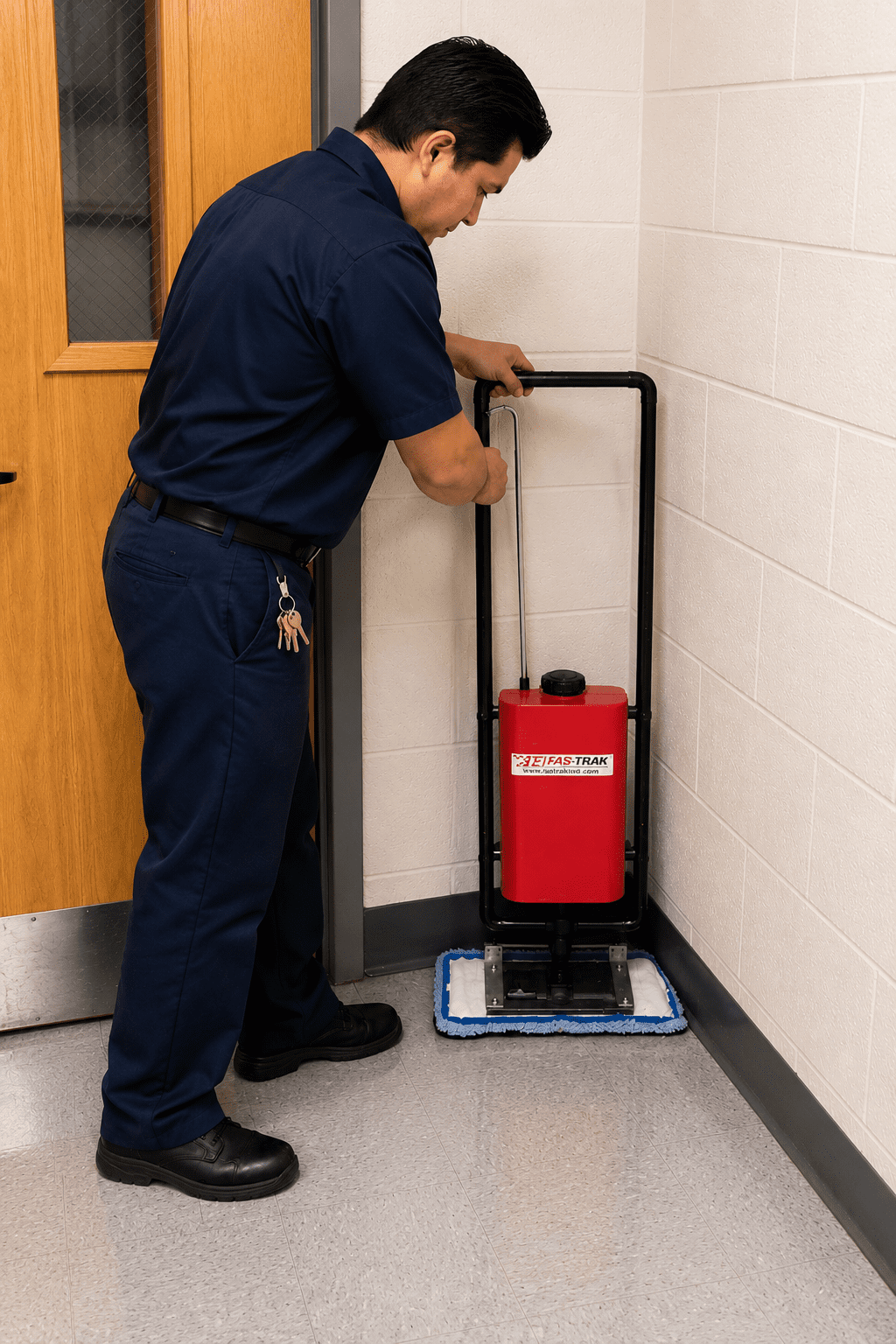
A recurring complaint is evidence that the source of the problem has not been resolved.
The response may improve the visible symptom for a day while leaving the process failure in place.
Examples include:
- Floor edges that repeatedly look unfinished
- Mineral buildup that returns because routine cleaning does not remove it
- Odor concerns that are masked instead of traced
- Carpeted areas that require repeated passes
- Surfaces that look different depending on the employee or shift
Review complaint logs, work orders, inspection notes, and informal feedback from building occupants.
For every repeated issue, ask:
- Where does it occur?
- When does it return?
- Who normally handles it?
- How long does the correction take?
- What products and materials are used?
- Is the response treating the source or only the visible symptom?
Scale Away pads, vacuuming systems such as Fas-Vac or ACTIV8, edge-cleaning tools, and odor-control options may be relevant. However, a product should only be recommended after the facility identifies the surface and process responsible for the repeat work.
Facility teams and distributors can review Fas-Trak’s current commercial cleaning equipment to identify potential options for a measured demonstration.
Also Read From Vendor to Problem-Solving Partner | Fas-Trak Operational Intelligence™

Facility Walkthrough Assessment
Use this assessment during the walkthrough. Select one high-cost task for a controlled demonstration instead of attempting to change the entire cleaning program at once.
| Cost Area | What to Observe | What to Measure | Decision Question |
|---|---|---|---|
| Labor flow | Stops, travel, refills, cord changes, and repeat passes | Minutes per task and number of interruptions | Where can a step be removed? |
| Product use | Mixing, dispensing, overlap, leftovers, and disposal | Amount prepared, used, and discarded | Can the process be controlled? |
| Access | Ladders, bending, stretching, and furniture movement | Setup time and areas routinely skipped | Can the task be reached more directly? |
| Consistency | Technique, setup, application, and finished results | Variation by employee or shift | Can the method be standardized? |
| Recurring issues | Complaints, callbacks, touch-ups, and repeat soil | Frequency and correction time | What source or process remains unresolved? |
Turn the Walkthrough Into a Measurable Demonstration
Choose the problem with the strongest combination of labor cost, frequency, and operational frustration.
Record the current method first. Then test the proposed method under comparable conditions.
Measure:
- Setup time
- Production time
- Material use
- Operator effort
- Cleanup requirements
- Finished quality
The demonstration should answer a specific question, such as whether the proposed process reduces refills, repeated passes, setup time, or product consumption.
It should not depend on a polished presentation alone.
This approach also improves the distributor-customer relationship. The recommendation grows from the customer’s building, crew, and workflow.
Fas-Trak supports that process through product training, demonstration resources, and direct consultation for cleaning and coating applications.
Also Read Why the Best Facility-Service Partners Bring Ideas—Not Just Products
Conclusion: Look at the Process Before Recommending the Product
The most expensive cleaning problems are often ordinary tasks performed inefficiently every day.
A structured facility cleaning walkthrough makes those losses visible by examining labor flow, product use, access, consistency, and recurring complaints. Once the baseline is documented, the next step is a focused demonstration using measurements both sides understand.
Fas-Trak works with distributors, manufacturers’ representatives, and facility teams to connect observed problems with practical cleaning and coating solutions.
Use the Facility Walkthrough Assessment to identify the strongest opportunity, then contact Fas-Trak to plan a demonstration around the work that is actually costing the facility time and money.
Contact Fas-Trak for help evaluating cleaning workflows and arranging an equipment demonstration.
☎️Contact Fas-Trak

Frequently Asked Questions
What is a facility cleaning walkthrough?
It is a structured review of how cleaning work is prepared, performed, checked, and corrected. It focuses on the process as well as the final appearance.
What should be measured during a cleaning walkthrough?
Measure task time, travel, refills, repeat passes, product use, callbacks, setup, cleanup, and differences between employees or shifts.
How does a walkthrough reveal hidden cleaning costs?
It exposes repeated steps and resource use that do not appear in a basic visual inspection, including excess travel, over-application, difficult access, and rework.
Should equipment be selected before the walkthrough?
No. Identify and measure the operational problem first. Equipment can then be evaluated against a clear baseline and job requirement.
How should a facility test a proposed cleaning solution?
Run a controlled demonstration under realistic conditions and compare the current and proposed methods for time, product use, operator effort, cleanup, and finished results.
