Michele Matthews

Michele Matthews

How Layered Environmental Hygiene Supports Student Success, Staff Wellness & Parent Confidence

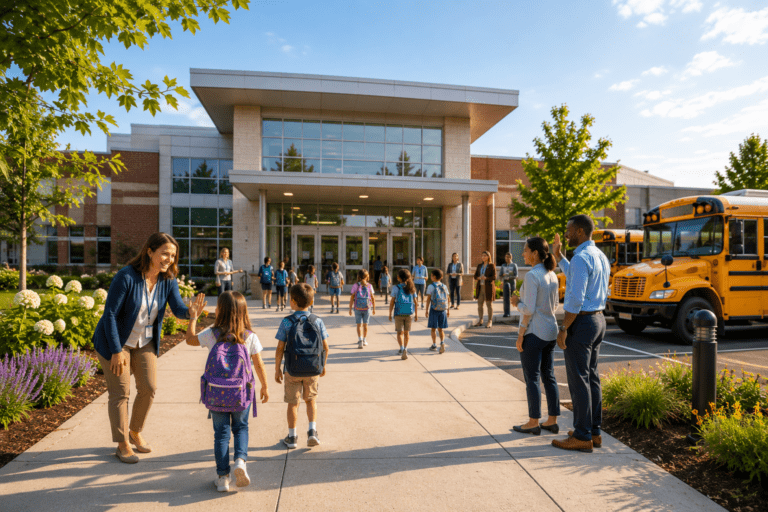
Parents and students arriving at a clean, modern school entrance with welcoming teachers and well-maintained facilities supporting a healthy learning environment.

Every school invests in education—but the most successful schools also invest in the environments where learning takes place. From classrooms and restrooms to school buses, athletic facilities, and teacher workspaces, layered environmental hygiene strategies help create cleaner, healthier, and more welcoming schools. Discover how integrated solutions from Fas-Trak—including Fas-Tab HSC Chlorine Dioxide Tablets, REVA Dry & Damp Wipers, Pebble HEPA Hand Dryers, UV400 Air Purifiers, Rapid OC, Odor Control 20, Ultra-Trak Plus, and the Fluid Tool—can help educational facilities build confidence, improve consistency, and support healthier learning environments throughout the school year.

What Parents Notice First: The Facility Conditions That Shape School Perception

parents meeting with the principle in a new well kept school. they are happy and pleased at how nicely kept the school is.

Parents may never review a school's sanitation protocols, custodial procedures, or facility maintenance schedules. However, they begin forming opinions about a school within moments of entering the building. Odors, restrooms, hallways, athletic facilities, school buses, and common areas all contribute to how a school is perceived. Educational facilities that prioritize environmental hygiene often create stronger first impressions, greater confidence, and more positive experiences for students, parents, staff, and visitors.

School Odor Control Solutions: Why School Odors Keep Coming Back and How to Stop Them

Collage of educational facility environments including a school bus, hallway lockers, classroom, restroom, and athletic training room, highlighting key areas for school sanitation and odor-control programs.

If your school's locker room, bus fleet, athletic facilities, or restrooms continue to develop odors despite regular cleaning, the issue may not be the cleaning itself. Most recurring odor problems originate from environmental conditions that traditional cleaning programs fail to address. Schools that focus on odor sources rather than odor symptoms often achieve more consistent results, fewer complaints, and improved facility experiences.

School Air & Surface Sanitizing Systems: A Complete Guide for Educational Facilities

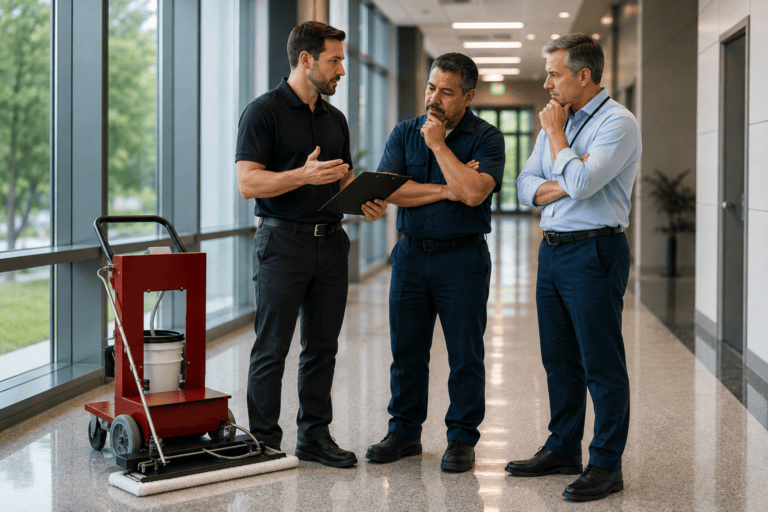
a school principle overseeing that the facility is cleaned properly

Educational facilities face growing pressure to maintain cleaner classrooms, fresher indoor environments, and more consistent sanitation practices despite staffing shortages and budget constraints. A comprehensive air and surface sanitizing program helps schools address recurring odors, improve environmental hygiene, standardize cleaning processes, and support healthier learning environments across the entire campus.

How Are Schools Finishing Large Hallways & Classrooms Faster with Smaller Crews?

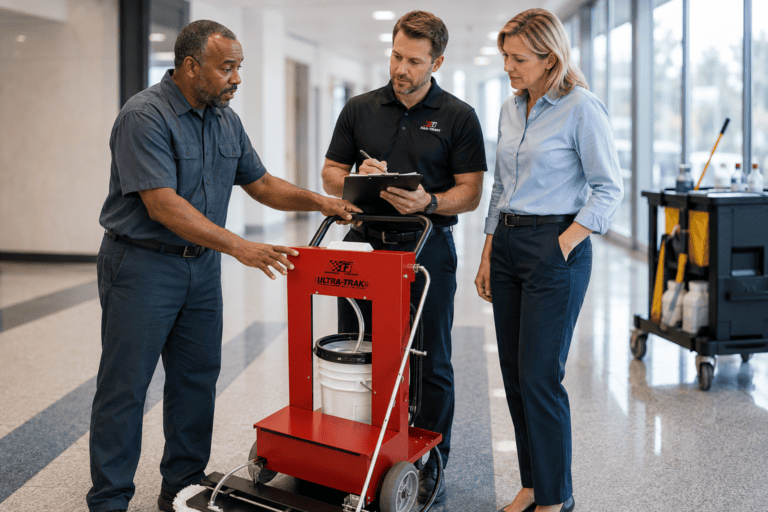
School maintenance teams are responsible for larger facilities, tighter turnaround schedules, and higher appearance expectations than ever before. Ultra-Trak floor finishing systems help schools improve workflow continuity, reduce overlap and correction work, maintain more consistent floor appearance, and complete large hallway and classroom finishing projects more efficiently.